What drives the build and run cost of a chatbot by type and channel, with model prices and WhatsApp pricing rules as of November 2026 and a scoping checklist for an accurate quote.
“How much does a chatbot cost?” has two answers, and buyers usually get only the first. The build cost is what you pay once to design, connect and test the assistant. The run cost is what you pay every month for model usage, hosting, messaging fees and the hours spent keeping answers right. Over two or three years, the second can matter as much as the first.
This breakdown explains what drives both, by chatbot type and by channel. It does not give a price list, because a figure without your scope would be a guess. It does give the published prices that set the run cost, as of 13 November 2026, and a worked calculation you can repeat with your own numbers. Chatbots are one part of a wider family of assistants and agents; our guide to AI agents for business covers how agents that take actions differ from bots that answer questions.
Key takeaways
- Build cost is driven by the type of bot (FAQ, knowledge base, transactional or voice), the number of integrations and channels, and the state of your content.
- Run cost is driven by conversations per month, tokens per conversation, the model and channel fees. Model choice alone changes it by more than ten times.
- At list prices on 13 Nov 2026, model usage for 1,000 support conversations in our worked example ranged from $1.80 to $36.00 depending on the model.
- WhatsApp moved to per-message pricing on 1 July 2025, and from 1 Oct 2026 Meta charges again for some service and utility messages that had been free.
- Budget for upkeep: reviewing conversations, updating content and re-testing after changes. It is the line most often left out.
The four types of chatbot and what each one involves
Cost follows capability. A bot that answers twenty fixed questions and a voice agent that books appointments in your calendar are both called chatbots, but the work behind them differs by an order of magnitude.
| Type | What it does | Main build cost drivers | Relative build effort |
|---|---|---|---|
| Rule-based FAQ bot | Answers a fixed set of questions through menus or keyword matching | Number of questions and flows, channel set-up | Lowest |
| Knowledge base assistant (RAG) | Answers questions in natural language from your website, documents and policies, and can point to the source | Volume and state of content, permission rules, evaluation set, handover design | Medium |
| Transactional assistant | Also does things: checks orders, books appointments, creates tickets, captures leads into a CRM | Number and quality of integrations, authentication of the customer, approval rules, error handling | Medium to high |
| Voice assistant | Answers or makes phone calls, understands speech and speaks back, transfers to people | Telephony integration, speech recognition and synthesis, latency, languages and accents, call recording and consent | Highest |
Source: AcmaSoft delivery practice. Relative effort only; no prices, because effort depends on scope.
Rule-based menu bots
Menu and keyword bots are cheap to build and cheap to run, because no language model is involved. They frustrate customers whenever a question is worded differently or falls outside the menu, which is why most new projects now use a language model for understanding even when the answers are fixed.
Knowledge base assistants
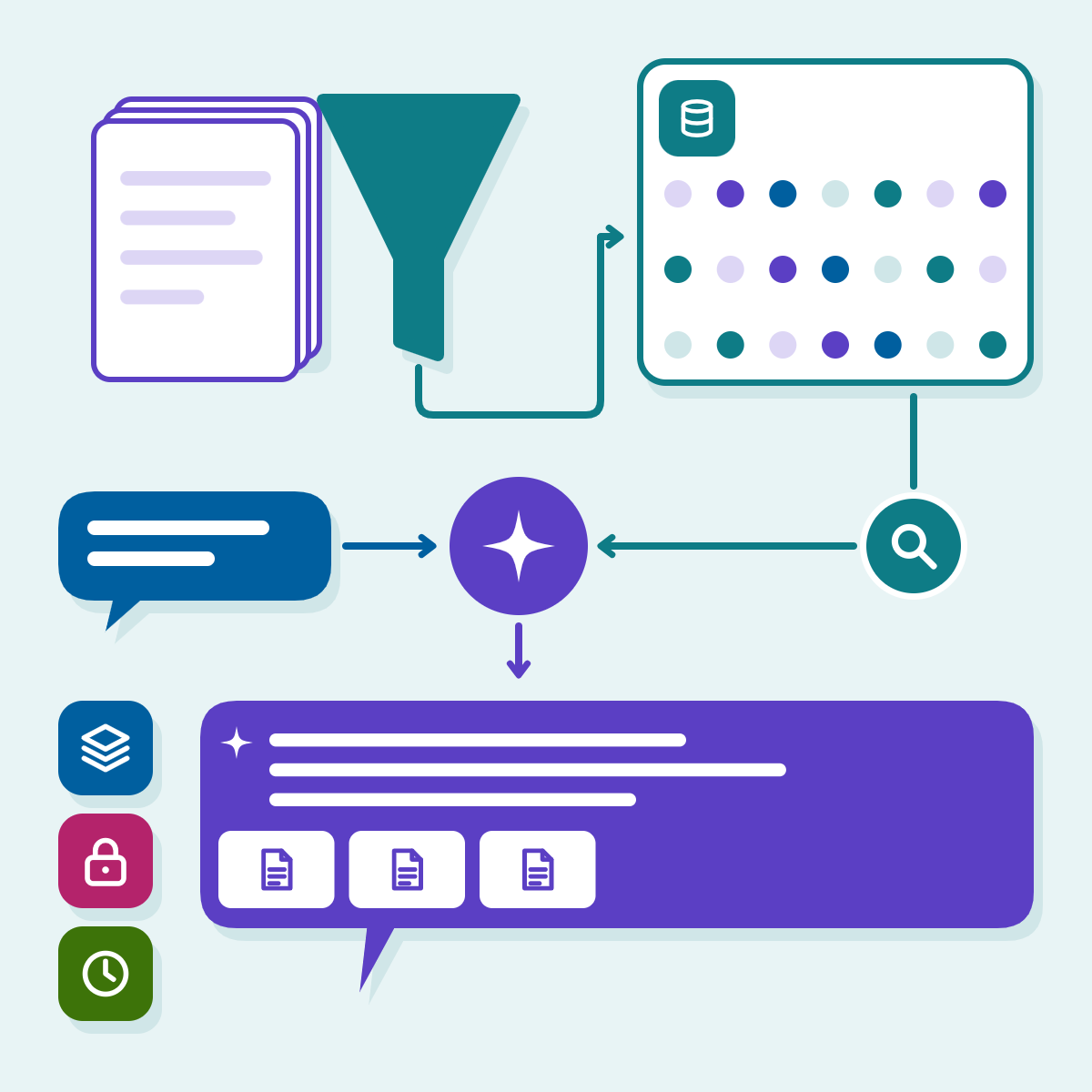
Most business chatbots today are this type. The assistant finds relevant passages in your content and gives them to a language model to write the answer, a method called retrieval-augmented generation. The largest cost driver is your content: if it is current and in one place, preparation is quick; if it is spread across old PDFs, shared drives and people’s heads, collecting and cleaning it can be the biggest part of the project. The second driver is testing: a set of real customer questions with agreed good answers, run before launch and after every change.
Transactional assistants
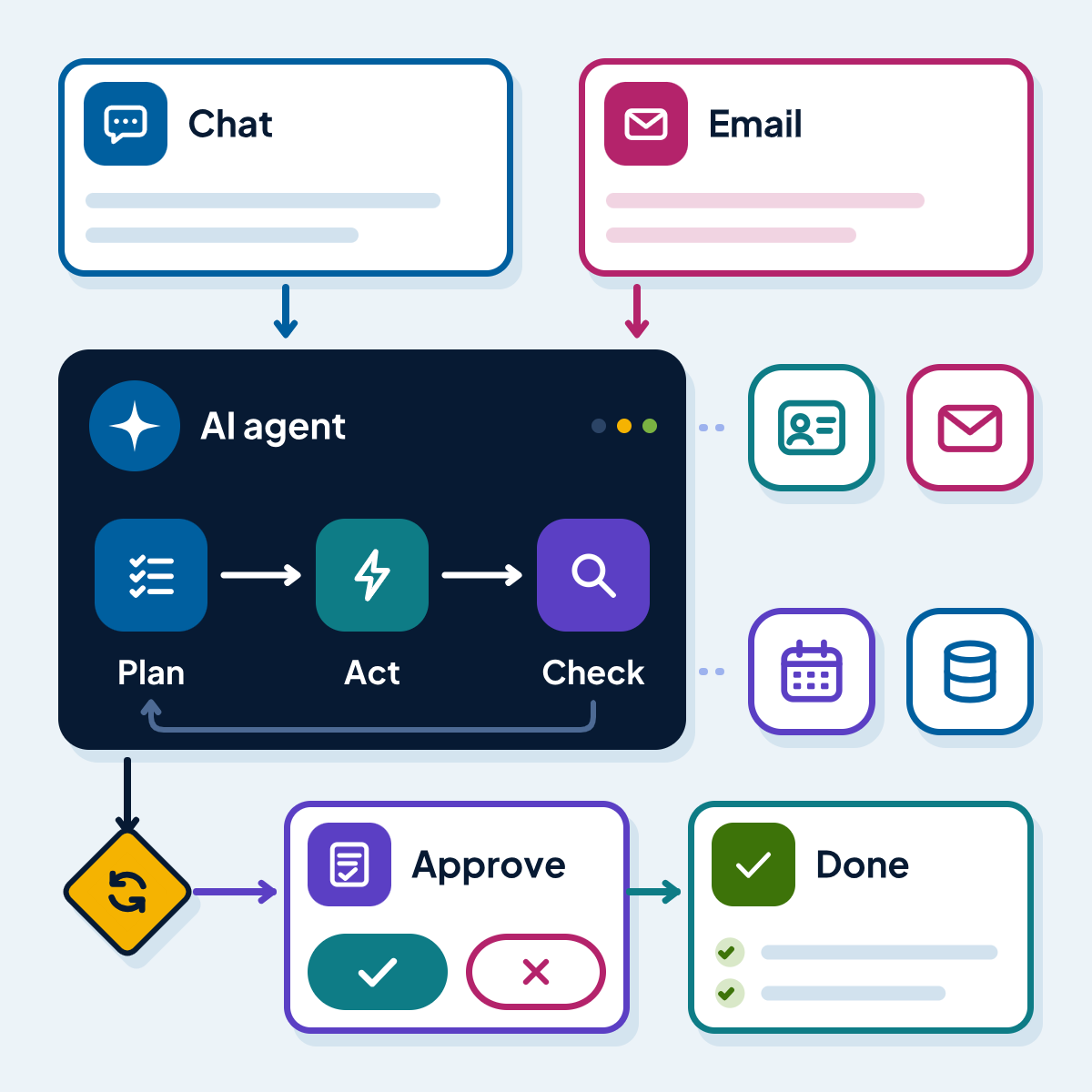
Each action the bot takes needs a secure connection to a system, with authentication, error handling and rules about what the bot may do without a person. Checking an order status through a clean API is quick. Changing a booking in an old system without an API may need custom work or RPA. Identity matters too: before a bot reveals or changes anything about an account, it must know who it is talking to.
Voice assistants
Voice adds telephony, speech recognition, speech synthesis and a strict latency budget, because callers notice pauses that would be invisible in chat. Languages and accents need testing with real recordings and background noise. Call recording, consent and transfer to a person add design and compliance work. AI Call Studio, the voice agent platform from AcmaTel in our group, shows the scope: sales, support and collections calls in Indian languages and Hinglish, with handover to a person together with the conversation so far, plus call QA, scoring and simulations to test and improve agents.
How the channel changes the cost
The same assistant can run on several channels, and each one adds work and, in some cases, fees.
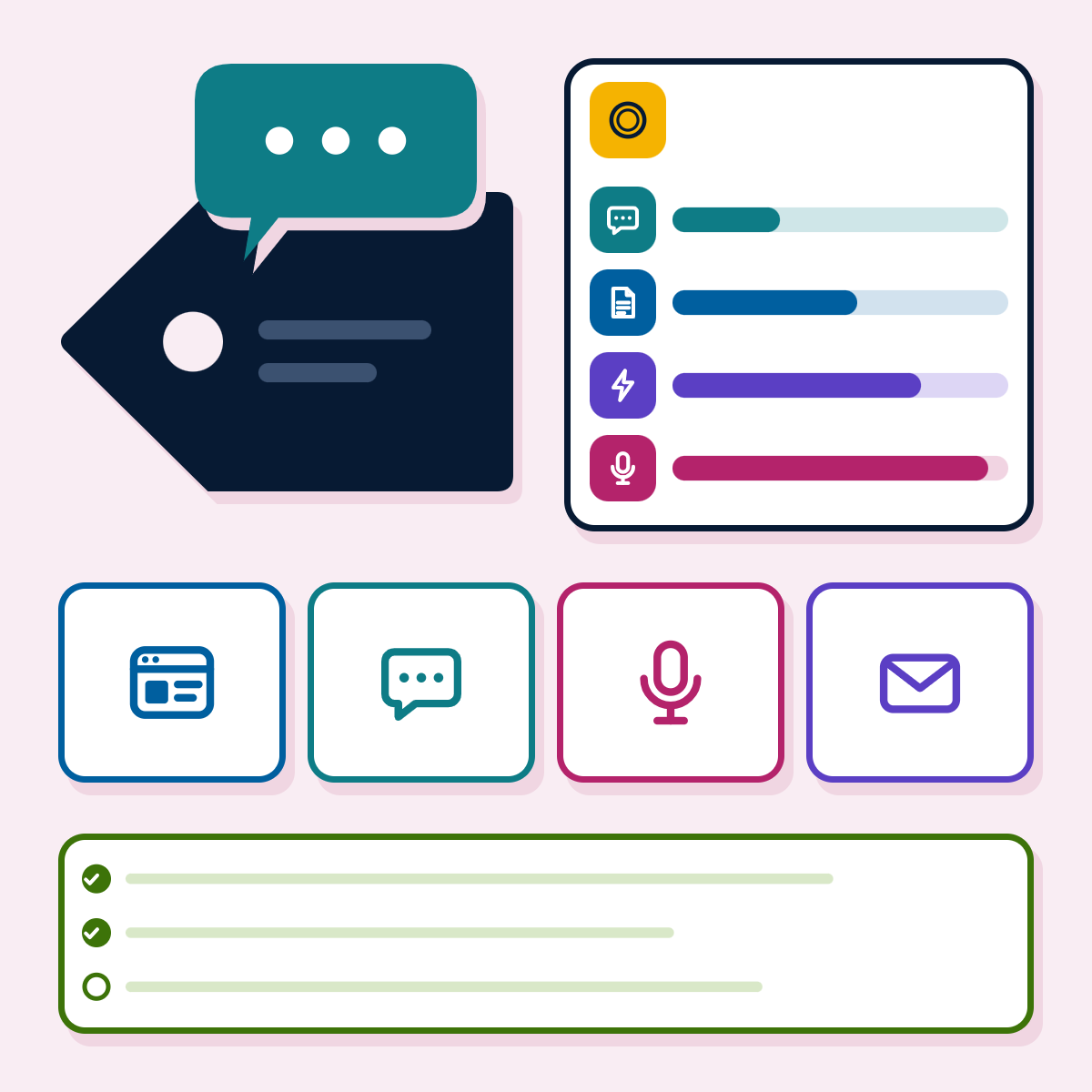
- Website or app chat: a widget on your own site. No per-message fees beyond model usage and hosting. Design and accessibility work for the widget, and integration with your live chat or helpdesk for handover.
- WhatsApp: access through the WhatsApp Business Platform, message templates approved by Meta for messages sent outside the customer service window, opt-in records, and Meta’s per-message charges (below).
- Phone: telephony provider charges per minute, speech services and the voice work described above.
- Several channels: one assistant with a shared knowledge base and conversation history across channels costs more to build than one channel, but less than separate bots.
Start with one channel, measure, then add others. It keeps the first build small and tells you which channel customers actually use.
WhatsApp pricing as of November 2026
According to Meta’s WhatsApp Business Platform pricing documentation, checked on 13 November 2026:
- Pricing is per message. Conversation-based pricing “was replaced with per-message pricing on July 1, 2025”, and businesses “are only charged when a message is delivered”.
- Template messages fall into marketing, utility and authentication categories, each with its own rate by market. Non-template messages are service messages, plus a newer Meta Business Agent category added on 1 July 2026.
- A 24-hour customer service window opens when a customer messages or calls the business, and each new message resets it. Inside the window you can send non-template messages; outside it, only templates.
- Each business phone number gets 1,000 free service messages a month. From 1 October 2026, service messages beyond that tier, and utility messages inside an open service window, are charged again; both had been free.
- Messages to users who arrive from a Click-to-WhatsApp ad are free for up to 7 days, except Meta Business Agent messages.
Rates differ by the recipient’s country and by category, so a bot serving customers in several of our markets has a blended rate. Use Meta’s current rate card for your markets when you budget, and design flows so that proactive messages are deliberate rather than automatic.
Want a second opinion on your plans?
Tell us what you are working on. A specialist will look at it and reply with practical next steps.
Get in touchRun cost: what model usage really costs
Language model providers charge per token, roughly per word fragment, separately for what you send (input) and what the model writes (output). For a knowledge base assistant, input is much larger than output, because each turn sends the instructions, the retrieved passages and the conversation so far.
The chart shows model usage for 1,000 support conversations under one stated set of assumptions, calculated from each provider’s list prices.
How the figures are calculated, so you can redo them with your own numbers: 1,000 conversations of 4 turns at 3,000 input tokens per turn is 12 million input tokens; at 300 output tokens per turn it is 1.2 million output tokens. Multiply each by the model’s price per million tokens and add. For example, Claude Sonnet 5.5 lists $2 per million input and $10 per million output tokens: 12 x $2 + 1.2 x $10 = $36.
| Model | Input | Output |
|---|---|---|
| Claude Haiku 5.5 | $0.10 | $0.50 |
| GPT-6 Luna | $0.10 | $0.50 |
| Gemini 3.5 Flash-Lite | $0.30 | $2.50 |
| Gemini 4 Hydrogen | $1.50 | $7.50 |
| Claude Sonnet 5.5 | $2.00 | $10.00 |
| GPT-6.1 Sol | $2.00 | $10.00 |
Source: Claude API pricing (platform.claude.com/docs); OpenAI API pricing (developers.openai.com); Gemini API pricing (Google AI Studio docs). Checked 13 Nov 2026.
Four things move the real figure:
- Model choice. Small models are often good enough for answering from retrieved content; test them on your own questions before paying for a large one.
- Prompt caching. Instructions repeat on every turn, so caching them cuts input cost. On the Claude API, a cache hit on Sonnet 5.5 is listed at $0.10 per million tokens against $2 for normal input.
- Context size. Sending ten long passages when two would do multiplies input tokens. Good retrieval is also a cost control.
- Region. Some data residency options cost more: the Claude API lists a 1.1x multiplier for US-only inference on newer models, and OpenAI lists a 10% uplift for regional processing on models released on or after 5 March 2026.
Prices change several times a year, so recalculate before you commit a budget. A planned article on running generative AI in production will go deeper on keeping the monthly bill predictable.
The costs buyers forget
- Content upkeep. When prices, policies or products change, the knowledge base must change too, or the bot gives outdated answers with confidence.
- Conversation review. Someone should read a sample of conversations every week, especially early on, and turn problems into fixes.
- Re-testing. Every change to content, prompts or model should re-run the test set.
- Handover staffing. A bot that hands over well creates work for people; plan who receives it and when.
- Hosting, monitoring and logs. Small next to staff time, but monthly.
- Compliance work. Consent records, transparency notices and data handling suited to each market you serve. In the EU, the AI Act’s transparency duties include telling people when they are interacting with an AI system.
Our guide to AI development cost describes these as the “improve” budget, alongside build and run.
How to get an accurate chatbot estimate
An estimate is only as good as the brief behind it. Before asking any supplier for a quote, gather the answers to this list.
Scoping a chatbot project
- The top 30 to 50 questions customers ask, taken from real chats, emails and call notes
- Monthly volumes: conversations, and how many currently need a person
- The channels you need first, and the ones that can wait
- Where the answers live today, who owns that content and how current it is
- Any actions the bot should take: check orders, book, create tickets, capture leads, and the systems involved
- How customers prove who they are before the bot discusses their account
- When the bot must hand over, to whom, and through which tool
- Languages and, for voice, accents and call types
- The markets you serve and the data rules that apply to them
- What a good result looks like: resolution rate, handover rate, response time, satisfaction
- Who will review conversations and update content after launch
With these answers, a supplier can give a fixed price for a defined first release or a realistic estimate for a phased one, and you can compare quotes on the same basis.
How we price and build chatbots
Our AI chatbot development projects start from what customers actually ask, not from a widget. We review real conversations, prepare the knowledge base, set the rules for tone, topics and handover, test the assistant against real questions including difficult and off-topic ones, then go live on one channel and widen once results are steady.
For WhatsApp, our WhatsApp AI chatbot work covers templates, opt-in and flows on the Business Platform. To add an assistant to an existing product, our ChatGPT and LLM integration service connects the model to your app and data. If your own team will build it, you can hire AI developers to join them. For the engineering side in depth, see our guide to building an LLM application.
Pricing is by engagement model: a fixed price for a defined first release, paid against milestones; a dedicated team for a roadmap of channels and features; or time and materials while the scope is still being learned. Delivery runs remotely from India with one named lead and sprint demos, in office hours of 9:30 am to 6:30 pm India time, Monday to Saturday, with evening hours for North American clients by arrangement. Proposals and invoices are in US dollars or your own currency on request.
Get a costed proposal
Send the answers from the scoping checklist through our request a quote form. We will reply with a proposed first release, an estimate for the build and a monthly run cost calculated from current list prices for your volumes.
Get new guides by email
Articles and guides from our team, and company news. Unsubscribe at any time.
About AcmaSoft
AcmaSoft designs and builds websites, mobile apps and custom software, and runs SEO and digital marketing for its clients.
- Years of experience
- 17+
- Clients served
- 650+
- Projects delivered
- 2,000+
- Products shipped
- 300+