

Machine learning development services for custom models in production
At AcmaSoft, we build custom machine learning models for classification, regression and natural language processing, train them on your data, deploy them as APIs or batch jobs and keep them accurate with MLOps monitoring and retraining.
- Years of experience
- 17+
- Clients served
- 650+
- Projects delivered
- 2,000+
- Products shipped
- 300+
When a custom model is worth building
Language model APIs handle many text tasks, but some problems need a model trained on your own records: predicting a numeric value, scoring risk, spotting unusual transactions, classifying products or tickets at high volume, or making decisions in milliseconds at low cost.
Machine learning development covers the full path from data to a model in daily use. We frame the problem, prepare features from your data, train and compare models against a simple baseline, then deploy the best one with monitoring so you know when its accuracy starts to slip.
For sales forecasting, churn prediction and lead scoring delivered through dashboards, see data analytics, BI and predictive analytics. If your training data first needs cleaning or labelling, our data curation and labelling team can prepare it.
What you get with machine learning development
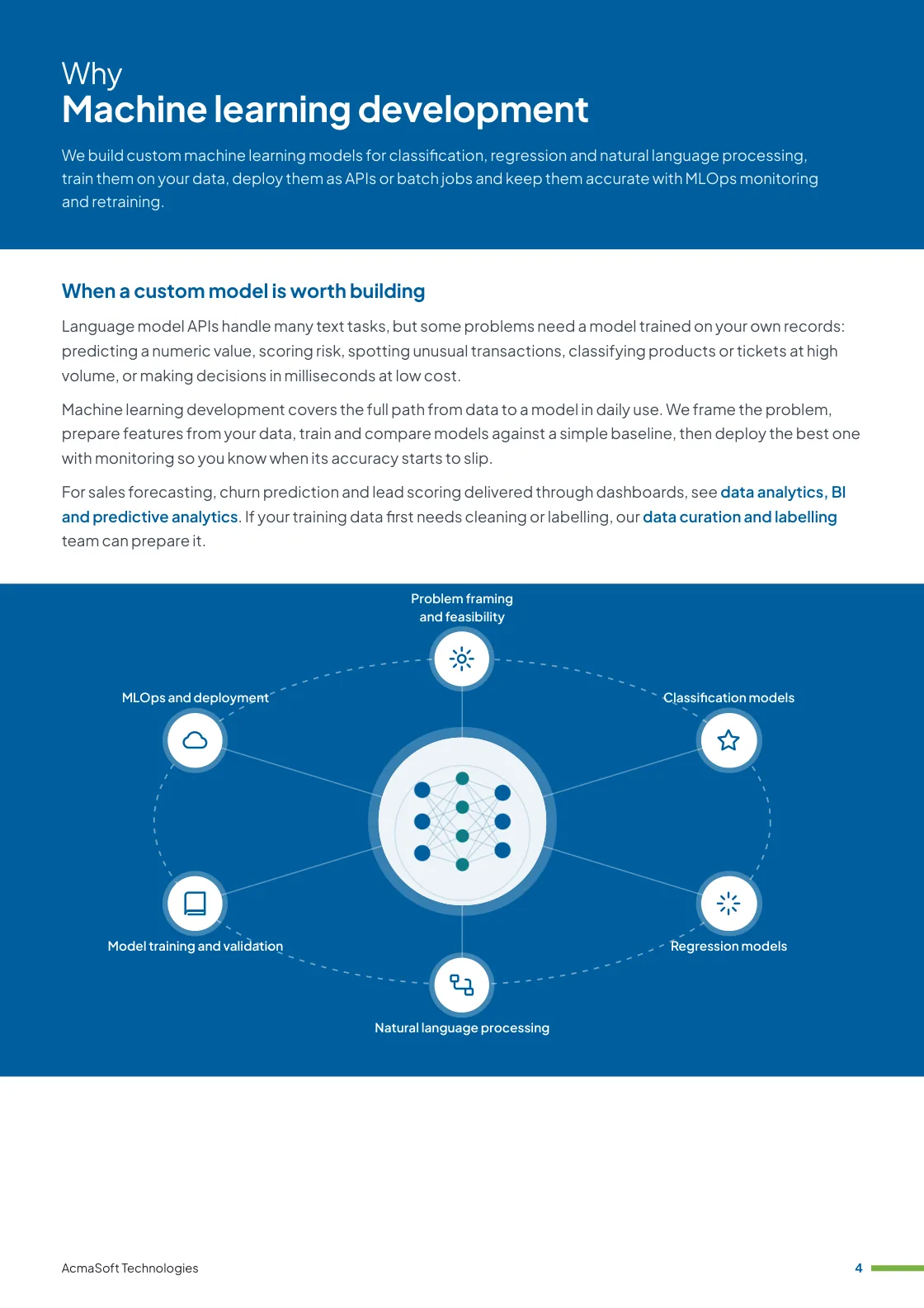
- Problem framing and feasibility
- Classification models
- Regression models
- Natural language processing
- Model training and validation
- One named lead from first call to launch
- Support and improvements after launch
More in AI and automation
Our machine learning development services
Six stages of custom model work. Some projects need all of them; others start from a model you already have.
-
Problem framing and feasibility
Defining what to predict
We turn the business question into a prediction target, agree how success is measured and check whether your data contains enough signal.
If a rule or a simple statistical method would perform as well, we tell you before any model is built.
-
Classification models
Sorting into categories
Models that assign records to classes, such as fraudulent or genuine, defect types, product categories, risk bands or customer intent.
We tune them for the errors that cost you most, for example missing a fraud case compared with flagging a good customer.
-
Regression models
Predicting values
Models that estimate numbers such as delivery time, price, claim cost, energy use or customer lifetime value, using methods such as gradient-boosted trees or neural networks.
Estimates can come with a range, so planners see how certain each one is.
-
Natural language processing
Learning from text
Text classification, entity extraction, sentiment and topic models trained on your own documents, reviews, tickets or messages.
Where a fine-tuned small model or a large language model fits better, we compare them on accuracy and running cost.
-
Model training and validation
Results you can rely on
We train with frameworks such as scikit-learn, XGBoost and PyTorch, validate on data held back from training and check performance across customer groups to catch bias.
Explainability reports show which inputs drive each prediction.
-
MLOps and deployment
Keeping models healthy
Models are packaged as APIs or scheduled batch jobs on your cloud, with versioning and experiment tracking in tools such as MLflow.
Monitoring watches input drift and accuracy, and retraining pipelines refresh the model when patterns change.
What to look for in a machine learning development company
Many models never leave a notebook. A partner who gets them into use offers:
-
Statistical rigour
Proper validation, baselines and leakage checks, so reported accuracy holds up on new data.
-
Engineering for production
Experience deploying models into real applications with APIs, data pipelines, monitoring and rollback.
-
Plain explanations
Clear reporting on what the model can and cannot do, its error rates and the decisions that should stay with people.
Ways to work with us
Choose the model that fits your scope and budget for machine learning development. Many clients start with one and move to another as the work grows.
-
Fixed price
A defined scope delivered for an agreed price and timeline, in milestones you approve.
- Best for
- Clear requirements, a fixed budget and a firm deadline.
- How it is priced
- One agreed price, paid in instalments tied to milestones.
-
Dedicated team
A team with a project lead that works only on your product, on the priorities you set.
- Best for
- Long-term products and roadmaps that change often.
- How it is priced
- A monthly fee per team member, based on role and seniority.
-
Time and material
You pay for the hours worked and can change the scope as you learn, in short iterations.
- Best for
- Requirements that are hard to fix up front, and ongoing improvements.
- How it is priced
- Hourly or daily rates by role, invoiced monthly against logged time.
Need AI and LLM developers to join your own team instead?
Hire AI and LLM developersWhat our clients say
More client reviews-
Collaborating with AcmaSoft using agile methods has been a pleasure. Their team's adaptability and communication ensure a smooth development journey.
Rahul S Bangalore -
AcmaSoft delivered software solutions that streamlined our operations. Their attention to detail and commitment to quality set them apart.
Michael L Berlin
Industries our AI and automation team works in
Our AI and automation team builds for businesses in these industries, and we adapt machine learning development to each one's rules, systems and customers.


Technology we use
We choose the stack for your budget, goals and current systems. Each link explains how we work with that technology or product.
Back end
Not sure which technology fits your project? Ask one of our architects.
Talk to an architectWorking with international clients
Our team delivers remotely, so the questions that matter are when we can talk and how the work is run. Here are our office hours beside yours.
Our office hours Monday to Saturday, 9:30 am to 6:30 pm India time (IST)
Evening hours for North American clients, by arrangement: Monday to Friday, 6:30 pm to 9:30 pm India time
| Your region | Our hours in your time | Shared working hours |
|---|---|---|
| UKLondon | 4 am to 1 pm | 9 am to 1 pm |
| Central EuropeParis, Berlin | 5 am to 2 pm | 9 am to 2 pm |
| US EastNew York, Toronto | 11 pm to 8 am (next day) Evening hours to 11 am | 9 am to 11 am In our evening hours, by arrangement |
| US WestLos Angeles, Vancouver | 8 pm to 5 am (next day) Evening hours to 8 am | No overlap Early calls 7 am to 8 am, by arrangement |
| GulfDubai, Abu Dhabi | 8 am to 5 pm | 9 am to 5 pm |
| Singapore | 12 noon to 9 pm | 12 noon to 6 pm |
| Australia EastSydney, Melbourne | 3 pm to 12 midnight | 3 pm to 6 pm |
Our day ends before yours starts, so updates are waiting each morning and we agree call times with you.
Times follow daylight saving where your region uses it, against a working day of 9 am to 6 pm. Messages sent outside our hours are picked up when the team is back.
-
Remote delivery
Discovery, design, development and testing run remotely, with one named lead, a demo of working features at the end of each sprint and a staging site you can try.
-
How we stay in touch
Email, video calls and chat such as Slack, Microsoft Teams or WhatsApp, with the hours of overlap and meeting times agreed in the communication plan at the start.
-
Contracts and invoices
Proposals, contracts and invoices are in English and priced in US dollars, or in your own currency on request. A non-disclosure agreement can be signed before you share any details.
-
Privacy laws we design for
We design forms, consent and data handling with the law of your market in mind: GDPR and UK GDPR, CCPA and CPRA, PIPEDA, the UAE PDPL, the Australian Privacy Act, Singapore's PDPA and India's DPDP Act.
Questions about machine learning development
Something else on your mind? Ask us directly and a specialist will reply.
Ask a questionHow much data do we need to train a machine learning model?
It depends on the problem, the number of inputs and how noisy the data is. Some classification tasks work with a modest labelled dataset, while others need years of history. We assess your data first and tell you plainly whether it is enough.
Should we use a custom model or a large language model?
Language models suit open-ended text tasks with little training data. Custom models usually do better on structured data, numeric predictions, high volumes and tight cost or speed limits. We often test both on your data and compare.
What is MLOps and why does it matter?
MLOps is the practice of deploying, monitoring and updating models reliably. Data changes over time, so a model that was accurate at launch can drift. Monitoring, versioning and retraining pipelines catch this before it affects decisions.
Can you improve a model our team already built?
Yes. We review the data, features, validation method and deployment, find where accuracy or reliability is lost, and then improve the model or rebuild it together with your team.
Who owns the model and the code?
Ownership is set out in our agreement, and as standard you receive the training code, model files, documentation and pipelines. Where possible everything is deployed in your own cloud account.
Related insights
All insights-
 16 Nov 2026
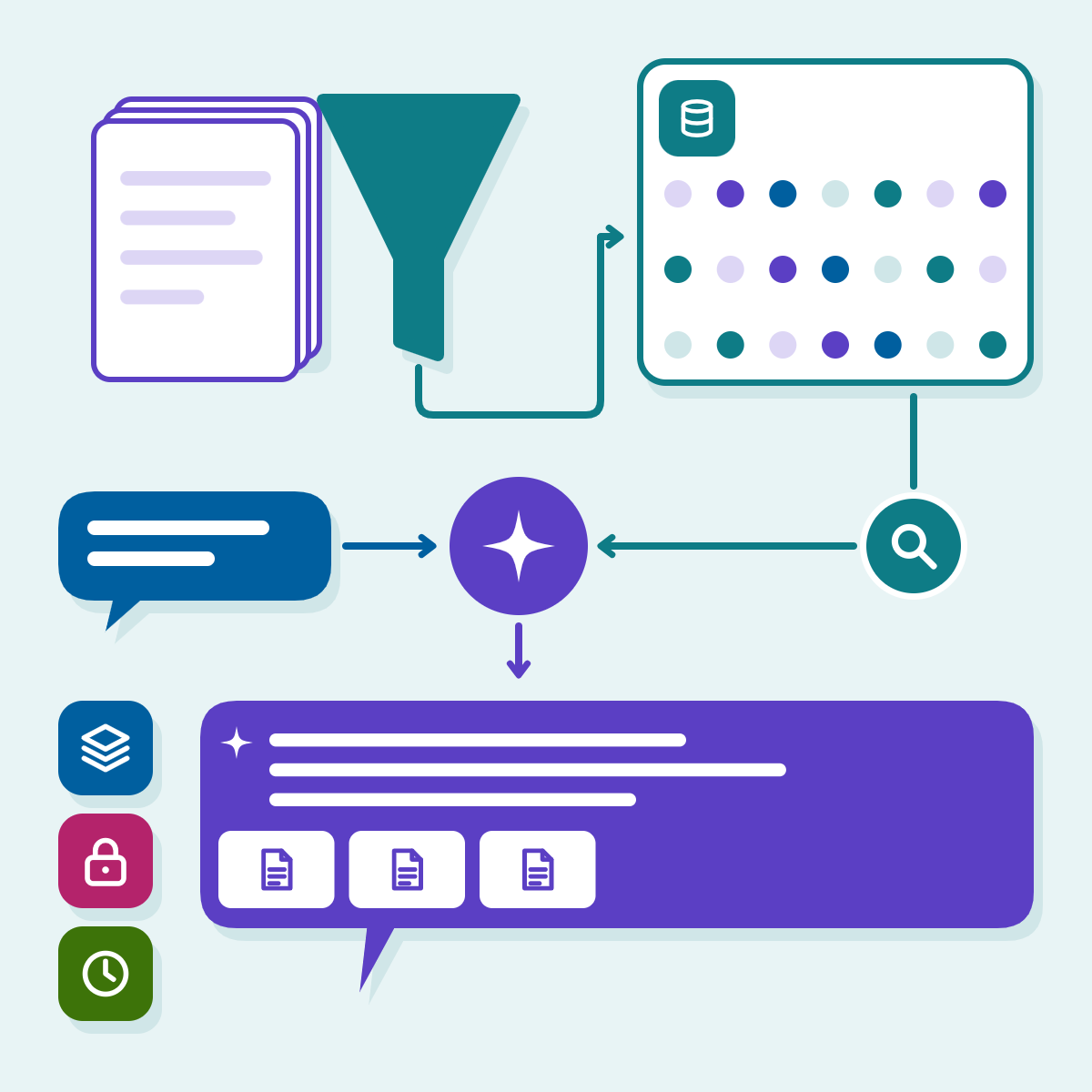
RAG explained: how retrieval-augmented generation works and when a business needs it
A plain walk-through of retrieval-augmented generation, a minimal pgvector query, the decisions that decide quality (chunking, permissions, freshness, evaluation) and…
-
 16 Nov 2026
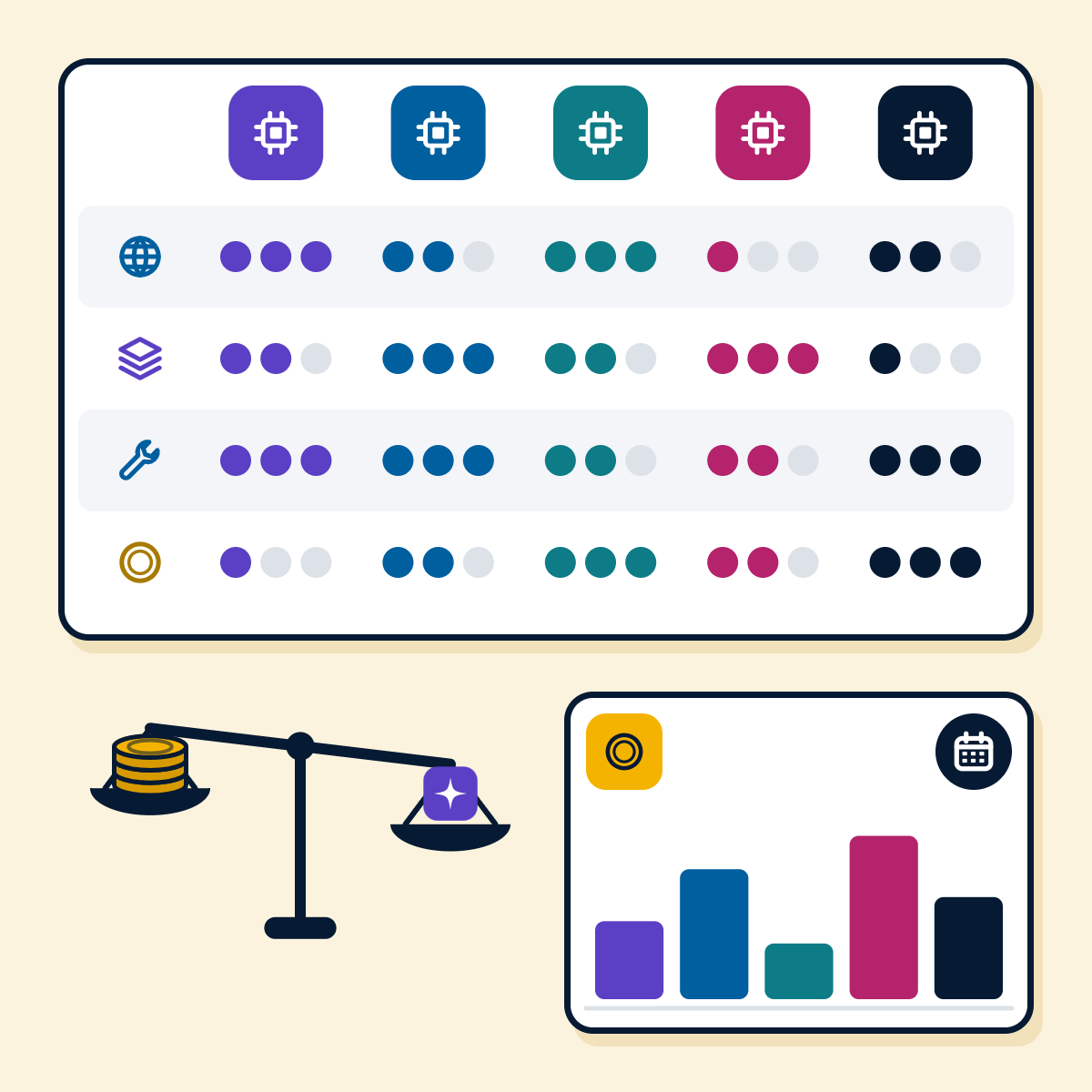
Choosing an LLM in 2026: GPT, Claude, Gemini, Llama and Mistral compared for business use
GPT, Claude, Gemini, Llama and Mistral compared on what decides a business project: price per million tokens, context, tool use,…
-
 16 Nov 2026
Chatbot development cost in 2026: a breakdown by type and channel
What drives the build and run cost of a chatbot by type and channel, with model prices and WhatsApp pricing…
Machine learning development brochure
We build custom machine learning models for classification, regression and natural language processing, train them on your data, deploy them as APIs or batch jobs and keep them accurate with MLOps monitoring and retraining.
Inside this brochure
- When a custom model is worth building
- Our machine learning development services
- How a machine learning project runs
- Technologies and solutions
- 3.1 MB
- 10 pages
- AI and automation
You have downloaded from us before, so this one needs no form.
Get the brochure
Tell us who you are and the download starts straight away. We remember you on this device for 90 days, so you only fill this in once.
Your download has started.
If it does not start, download the brochure here. The links work for 15 minutes.
- Your reference
- Brochure
What you can do next
- Read it and share itShare the brochure with your team before you get in touch. It is free to read and share.
- Get a quote when you are readySix short questions on our request a quote page, and a reply within one business day.
Start your Machine learning development project
Tell us what you are planning and a specialist will reply with next steps, a rough timeline and the questions we need answered.
- Emailsales@acmasoft.com
- Call+1 (707) 706 4092
- Prefer a call?
Thank you, your message is on its way.
It has reached our sales team, together with the page you sent it from.
- Your reference
- Budget
While we prepare your reply, here is the Machine learning development brochure.
Download the brochure, Machine learning development brochure, PDF, 3.1 MBWhat happens next
- A specialist gets in touchWithin one business day, by email or phone, with any questions about what you need.
- We talk it throughA short call about your goals, users, timeline and budget. We can sign an NDA first.
- You get a proposalScope, team, timeline and cost, with the engagement model that fits the work.