

Cloud migration services for moving applications and data to AWS, Azure or Google Cloud
At AcmaSoft, we assess what you run today, choose between re-hosting and re-platforming for each application, move your data with checks at every step and plan the cut-over so customers notice as little as possible, with a cost forecast before anything moves.
- Years of experience
- 17+
- Clients served
- 650+
- Projects delivered
- 2,000+
- Products shipped
- 300+
Before you move to the cloud
Applications often outgrow the server they started on. Hardware ages, one machine becomes a single point of failure and adding capacity means buying more of it. Public clouds such as Amazon Web Services, Microsoft Azure and Google Cloud let you rent capacity as you need it, in regions close to your users, with managed databases, storage and backups.
A move only pays off when it is planned. Copying servers across unchanged is quick but can cost more each month than the hosting it replaces, and a careless data transfer can lose orders or records. Each application needs its own decision on how much to change, and a cut-over plan the business has agreed to.
Not every site needs a cloud platform. For a typical business website or small store, managed hosting such as our Linux web hosting plans can be simpler and cheaper, and we will tell you when that is the better answer. Once workloads are in the cloud, our DevOps and CI/CD services automate how they are built and released.
What you get with cloud migration services
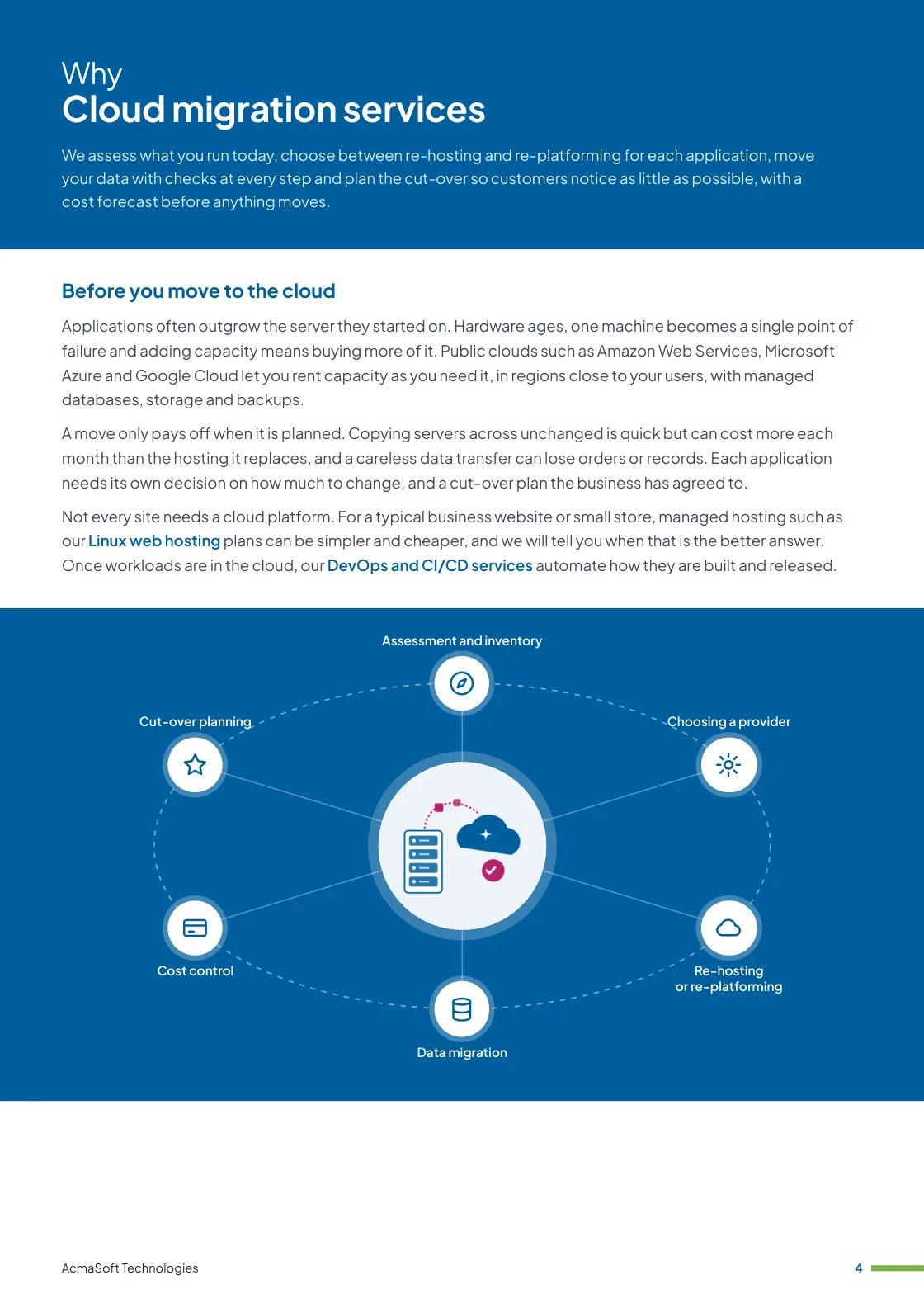
- Assessment and inventory
- Choosing a provider
- Re-hosting or re-platforming
- Data migration
- Cost control
- One named lead from first call to launch
- Support and improvements after launch
More in Software and app development
What our cloud migration services cover
Six parts of a migration, from the first inventory to the weeks after cut-over.
-
Assessment and inventory
Knowing what you run
We list every application, database, scheduled job, integration and dependency, with its current load, its owner and how critical it is to the business.
The result is a plan in waves that moves lower-risk systems first, so lessons are learned before the important ones move.
-
Choosing a provider
AWS, Azure or Google Cloud
We compare providers on the managed services your applications need, the regions where your data may be stored, your team’s skills and the licences you already hold, such as Microsoft licences that may carry over to Azure.
We set out the trade-offs in writing, so the decision rests on your requirements.
-
Re-hosting or re-platforming
How much to change
Re-hosting moves an application as it is onto cloud virtual machines, which is the fastest route. Re-platforming makes targeted changes, such as moving a database to a managed service like Amazon RDS or Azure SQL Database, or files to object storage.
We recommend an approach per application and explain what each costs now and over time.
-
Data migration
Nothing lost on the way
Databases and files move by a method that suits their size and rate of change, from a dump and restore in a maintenance window to continuous replication with tools such as AWS Database Migration Service.
Row counts, checksums and sample comparisons confirm the data arrived complete before anyone relies on it.
-
Cost control
A bill you can predict
We size resources from measured load rather than guesswork, forecast the monthly bill before migration and set budgets, alerts and tags so every cost has an owner.
After cut-over we review real usage and recommend right-sizing, reserved capacity or savings plans where the load is steady.
-
Cut-over planning
Switching over safely
A written runbook sets out the order of steps, DNS changes, the final data sync, who checks what and the point at which you would roll back.
We rehearse the cut-over on a copy first and schedule the real switch for your quietest hours.
What to look for in a cloud migration partner
A migration touches every system you run. A provider worth trusting will show you:
-
An honest cost forecast
A monthly estimate before the move that includes storage, data transfer and backups, not only server prices.
-
A tested rollback plan
A clear point in the cut-over where the old environment can take over again, rehearsed before the real switch.
-
Care after go-live
Monitoring, tuning and a review of the first bills, so problems that only appear under real traffic are fixed quickly.
Ways to work with us
Choose the model that fits your scope and budget for cloud migration services. Many clients start with one and move to another as the work grows.
-
Fixed price
A defined scope delivered for an agreed price and timeline, in milestones you approve.
- Best for
- Clear requirements, a fixed budget and a firm deadline.
- How it is priced
- One agreed price, paid in instalments tied to milestones.
-
Dedicated team
A team with a project lead that works only on your product, on the priorities you set.
- Best for
- Long-term products and roadmaps that change often.
- How it is priced
- A monthly fee per team member, based on role and seniority.
-
Time and material
You pay for the hours worked and can change the scope as you learn, in short iterations.
- Best for
- Requirements that are hard to fix up front, and ongoing improvements.
- How it is priced
- Hourly or daily rates by role, invoiced monthly against logged time.
Need DevOps engineers to join your own team instead?
Hire DevOps engineersWhat our clients say
More client reviews-
AcmaSoft's dedicated hosting solutions are tailored to our specific needs. The personalized approach ensures our web applications run smoothly without any compromises.
Ahmed Z Dubai -
The excellence of AcmaSoft's dedicated hosting is unmatched. Their robust infrastructure and dedicated support have elevated our hosting experience.
Sophie L Paris
Industries our software and app development team works in
Our software and app development team builds for businesses in these industries, and we adapt cloud migration services to each one's rules, systems and customers.


Technologies we use
We choose the stack for your budget, goals and current systems. Each link explains how we work with that technology or product.
Cloud and DevOps
Not sure which technology fits your project? Ask one of our architects.
Talk to an architectWorking with international clients
Our team delivers remotely, so the questions that matter are when we can talk and how the work is run. Here are our office hours beside yours.
Our office hours Monday to Saturday, 9:30 am to 6:30 pm India time (IST)
Evening hours for North American clients, by arrangement: Monday to Friday, 6:30 pm to 9:30 pm India time
| Your region | Our hours in your time | Shared working hours |
|---|---|---|
| UKLondon | 4 am to 1 pm | 9 am to 1 pm |
| Central EuropeParis, Berlin | 5 am to 2 pm | 9 am to 2 pm |
| US EastNew York, Toronto | 11 pm to 8 am (next day) Evening hours to 11 am | 9 am to 11 am In our evening hours, by arrangement |
| US WestLos Angeles, Vancouver | 8 pm to 5 am (next day) Evening hours to 8 am | No overlap Early calls 7 am to 8 am, by arrangement |
| GulfDubai, Abu Dhabi | 8 am to 5 pm | 9 am to 5 pm |
| Singapore | 12 noon to 9 pm | 12 noon to 6 pm |
| Australia EastSydney, Melbourne | 3 pm to 12 midnight | 3 pm to 6 pm |
Our day ends before yours starts, so updates are waiting each morning and we agree call times with you.
Times follow daylight saving where your region uses it, against a working day of 9 am to 6 pm. Messages sent outside our hours are picked up when the team is back.
-
Remote delivery
Discovery, design, development and testing run remotely, with one named lead, a demo of working features at the end of each sprint and a staging site you can try.
-
How we stay in touch
Email, video calls and chat such as Slack, Microsoft Teams or WhatsApp, with the hours of overlap and meeting times agreed in the communication plan at the start.
-
Contracts and invoices
Proposals, contracts and invoices are in English and priced in US dollars, or in your own currency on request. A non-disclosure agreement can be signed before you share any details.
-
Privacy laws we design for
We design forms, consent and data handling with the law of your market in mind: GDPR and UK GDPR, CCPA and CPRA, PIPEDA, the UAE PDPL, the Australian Privacy Act, Singapore's PDPA and India's DPDP Act.
Questions about cloud migration services
Something else on your mind? Ask us directly and a specialist will reply.
Ask a questionWill moving to the cloud reduce our hosting costs?
Not automatically. Cloud can cost less when resources are sized to real load and switched off when idle, but a straight copy of over-sized servers can cost more than you pay today. We forecast the monthly bill before migration so you decide with the numbers in front of you.
What is the difference between re-hosting and re-platforming?
Re-hosting, often called lift and shift, moves an application to cloud virtual machines with little or no change. Re-platforming makes targeted changes to use managed services, such as a managed database or object storage, without rewriting the application. The first is quicker; the second usually costs less to run and maintain.
How much downtime will the migration cause?
It depends on how much data there is and how it is copied. With continuous replication the final switch can often fit a short maintenance window; for simpler systems a planned outage at a quiet hour may be the safer choice. The cut-over plan states the expected downtime before you approve it.
Which cloud provider should we choose?
AWS, Azure and Google Cloud can all run typical business applications. The choice usually comes down to the managed services you need, where your data must be stored, licences you already hold such as Microsoft agreements, and your team's skills. We set out the trade-offs for your case.
Is a cloud platform right for a small business website?
Often it is more than a simple website needs. A well-run shared or VPS hosting plan is usually simpler and cheaper for a brochure site or a small store. Cloud platforms make sense when you need to scale, run several connected applications or meet specific availability requirements.
Related insights
All insights-
 16 Nov 2026
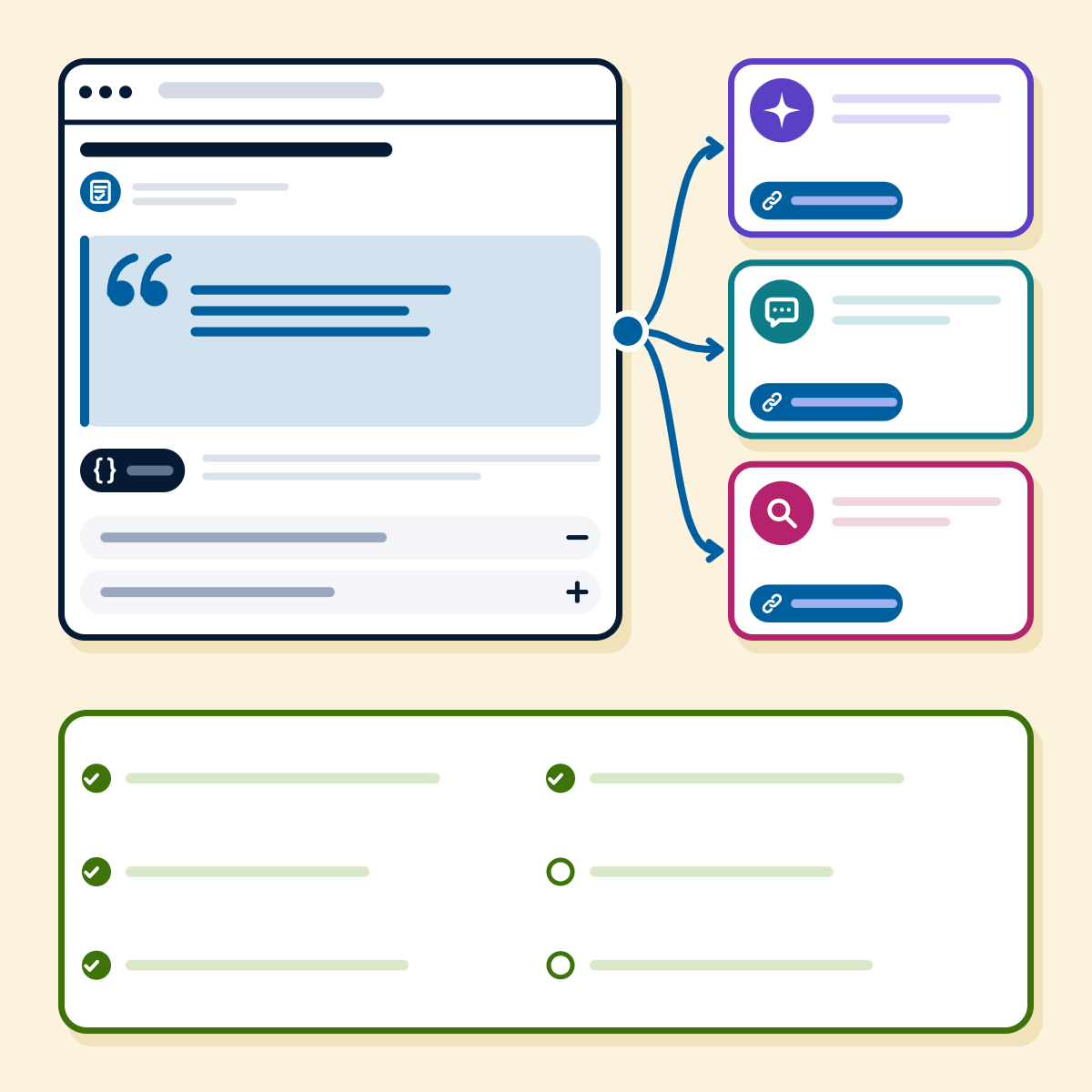
How to get cited in AI Overviews, ChatGPT and Perplexity: a practical checklist
A five-part checklist for being cited in AI answers, built from what Google, OpenAI, Perplexity and Microsoft publish: crawler access,…
-
 16 Nov 2026
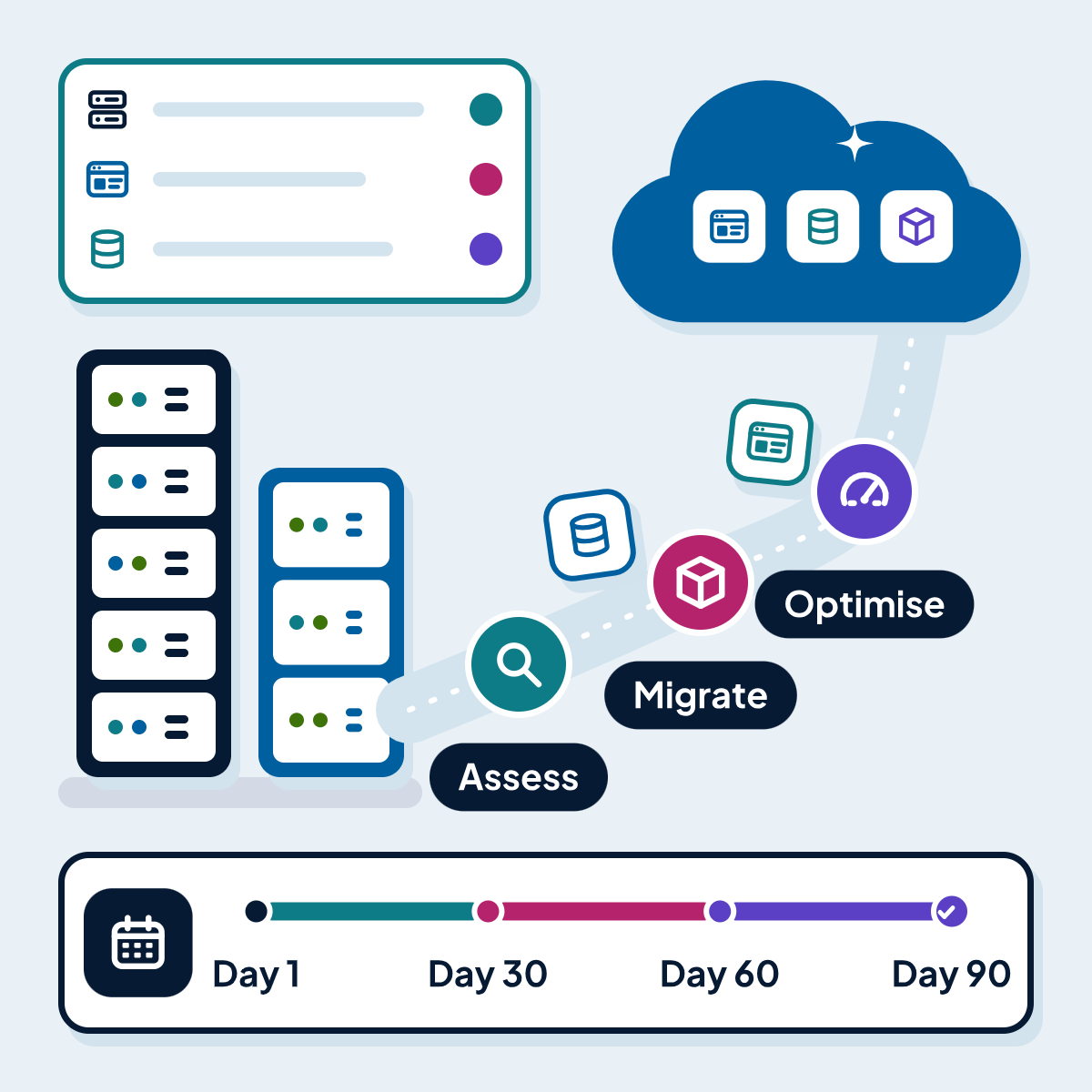
Cloud migration guide: strategy, costs and a 90-day plan
The 7 Rs applied to a typical mid-sized estate, provider and region choice in eight markets, data transfer rules, the…
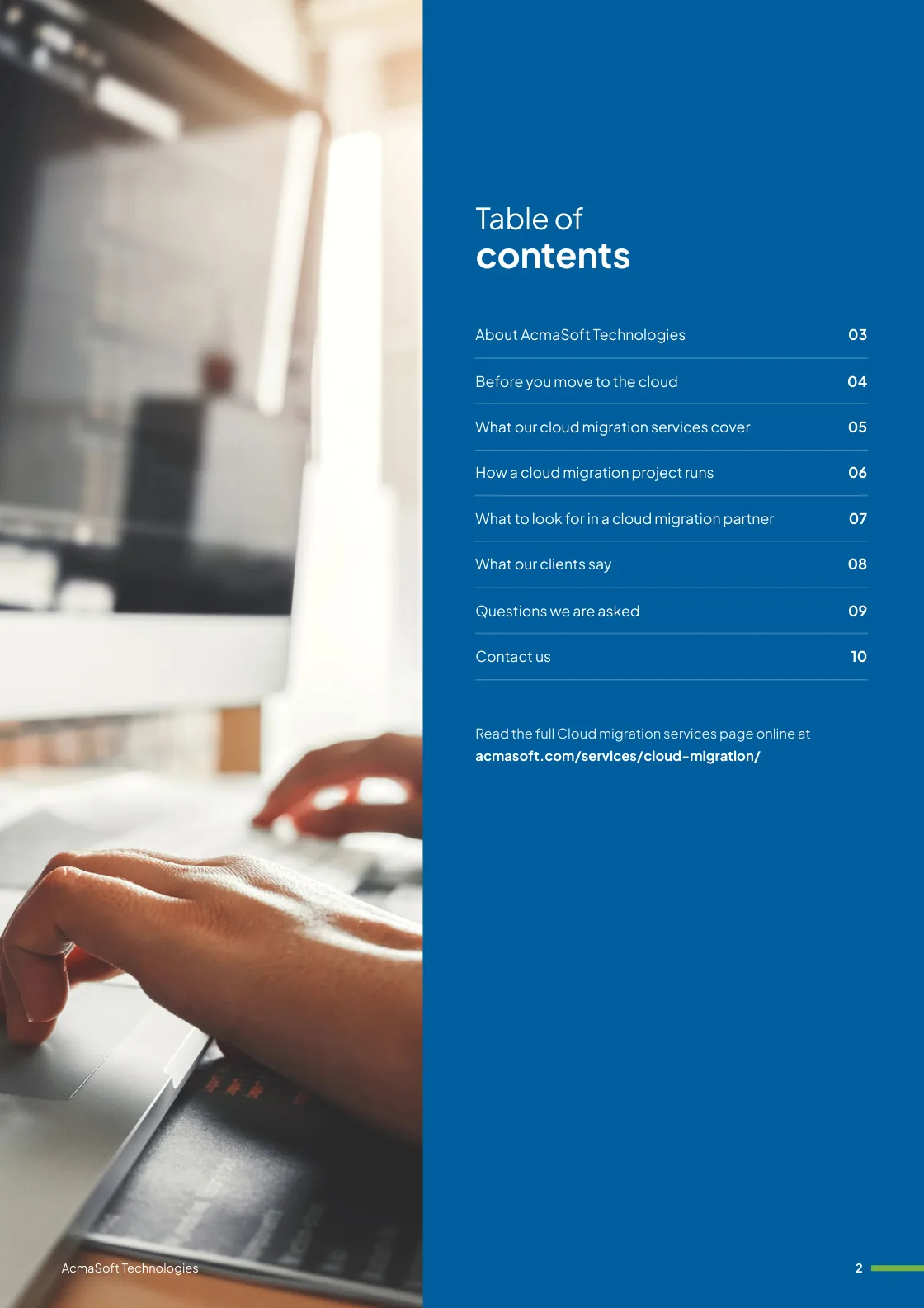
Cloud migration services brochure
We assess what you run today, choose between re-hosting and re-platforming for each application, move your data with checks at every step and plan the cut-over so customers notice as little as possible, with a cost forecast before anything moves.
Inside this brochure
- Before you move to the cloud
- What our cloud migration services cover
- How a cloud migration project runs
- Technologies and solutions
- 2.9 MB
- 10 pages
- Services
You have downloaded from us before, so this one needs no form.
Get the brochure
Tell us who you are and the download starts straight away. We remember you on this device for 90 days, so you only fill this in once.
Your download has started.
If it does not start, download the brochure here. The links work for 15 minutes.
- Your reference
- Brochure
What you can do next
- Read it and share itShare the brochure with your team before you get in touch. It is free to read and share.
- Get a quote when you are readySix short questions on our request a quote page, and a reply within one business day.
Start your Cloud migration services project
Tell us what you are planning and a specialist will reply with next steps, a rough timeline and the questions we need answered.
- Emailsales@acmasoft.com
- Call+1 (707) 706 4092
- Prefer a call?
Thank you, your message is on its way.
It has reached our sales team, together with the page you sent it from.
- Your reference
- Budget
While we prepare your reply, here is the Cloud migration services brochure.
Download the brochure, Cloud migration services brochure, PDF, 2.9 MBWhat happens next
- A specialist gets in touchWithin one business day, by email or phone, with any questions about what you need.
- We talk it throughA short call about your goals, users, timeline and budget. We can sign an NDA first.
- You get a proposalScope, team, timeline and cost, with the engagement model that fits the work.