A five-stage AI adoption roadmap for mid-sized businesses: choose the first use case, check data and systems, set controls, pilot against written exit criteria and go live with an owner. Includes the AI and data rules in eight markets.
Most mid-sized businesses do not have an AI problem. They have a sequencing problem. A team buys a chatbot licence, another team tries a writing assistant, someone in finance builds a clever spreadsheet macro with a language model, and a year later nobody can say what any of it returned or who is responsible when it goes wrong.
An AI adoption roadmap fixes the order of work. It says which use case comes first, what has to be true about your data before you build, which risks need a control, how a pilot proves itself and who owns the system once it is live. This guide sets out the five stages we use with clients, what each stage should produce, and the rules that apply in the eight markets we work in: the UK, USA, Canada, UAE, Australia, India, Singapore and the European Union.
Key takeaways
- Start from one process with a measurable cost, not from a tool. The first use case decides whether the second one gets funded.
- Check data and system access before you design anything. Missing integrations, not model quality, stall most first projects.
- Write the exit criteria for a pilot before it starts: accuracy on your own test cases, cost per task and who signs off.
- Put an owner, a run budget and monitoring in place before go-live. A pilot without an owner rarely becomes a product.
- Rules differ by market. The EU AI Act sets risk tiers; elsewhere privacy law does most of the work. Design for the strictest market you sell into.
Why mid-sized businesses need a roadmap, not a shopping list
AI use in organisations has moved fast. The AI Index 2025 from Stanford HAI reports that 78% of survey respondents said their organisation used AI in 2024, up from 55% the year before, and that the share using generative AI in at least one business function more than doubled, from 33% to 71%.
The same chapter is more sober about returns. Among respondents who use AI in service operations, 49% report cost savings, and the AI Index notes that most of the savings reported across functions are under 10%. Revenue gains are reported most often in marketing and sales, and the most common level is under 5%.
Read together, those figures describe the position many of our clients are in: AI is already in the building, but the gains are modest and spread thin. A roadmap concentrates effort on a small number of processes where the gain can be measured, and builds the controls once so that the second and third use case cost less than the first.
For a mid-sized business, typically 50 to 1,000 people, the constraints are specific. There is rarely a dedicated AI team. Data sits in a CRM, an ERP or accounting package, shared drives and email. IT is stretched, and the people who know how a process really works are the ones too busy to sit in workshops. The roadmap below is designed for that reality.
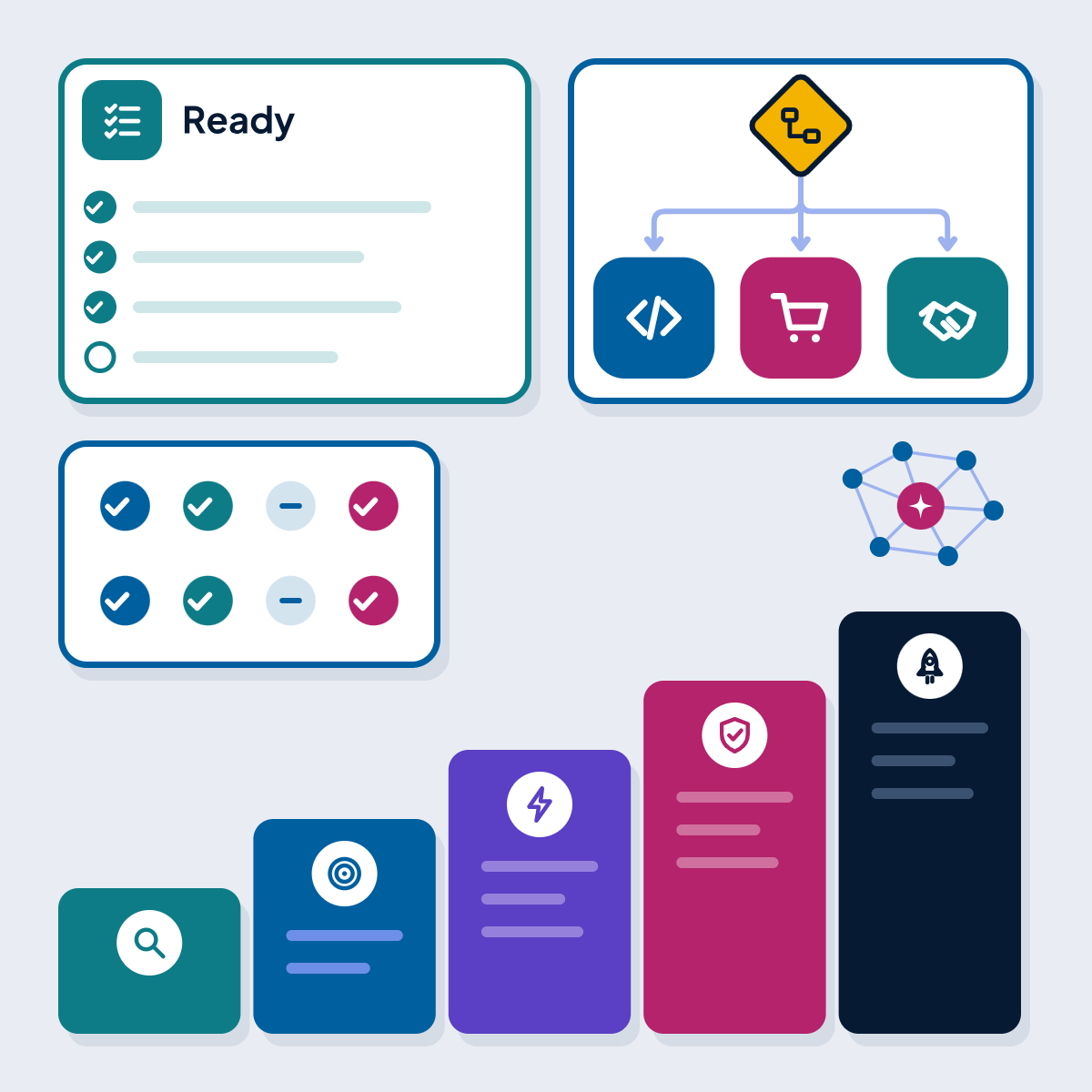
The five stages of an AI adoption roadmap
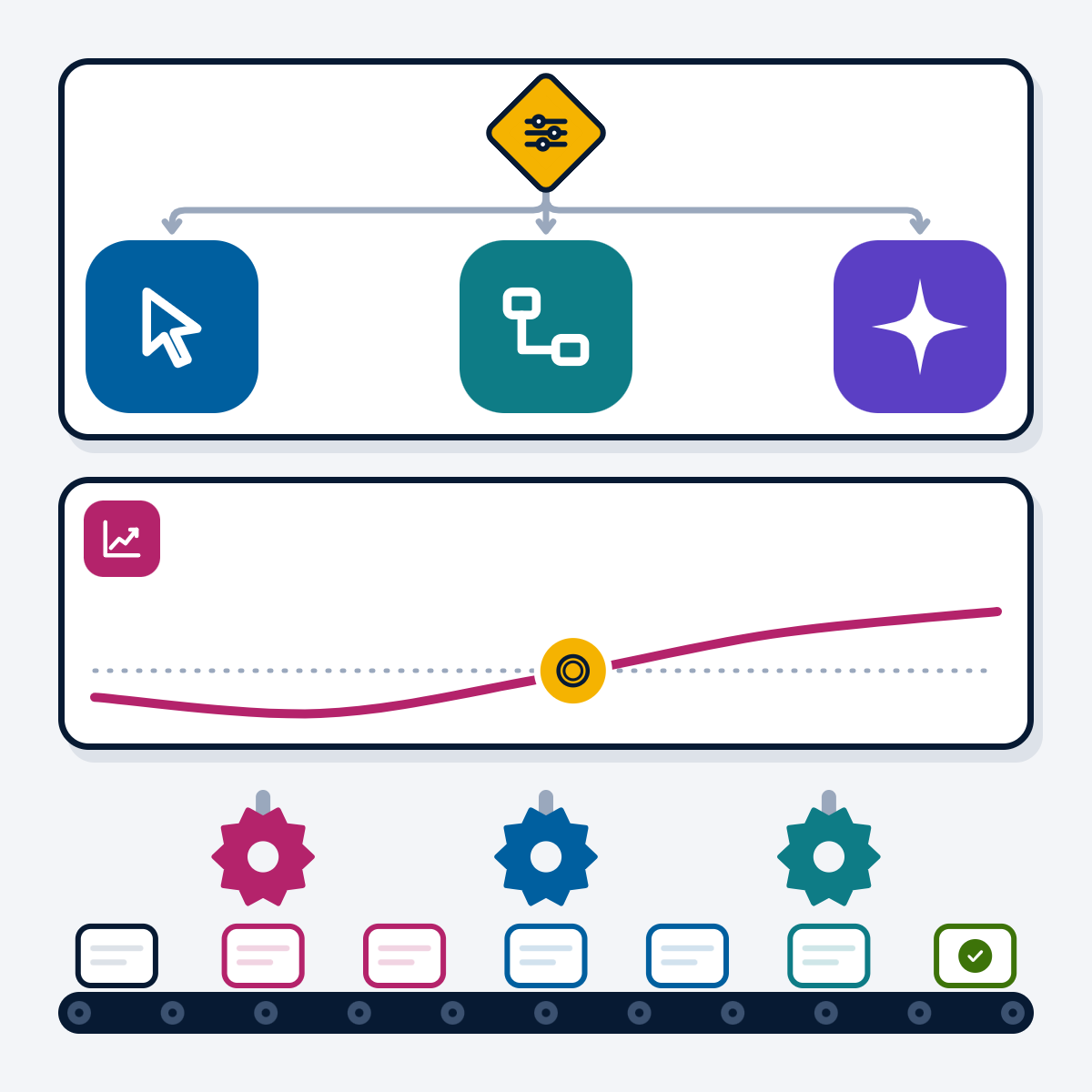
Each stage ends with a decision and a written output. If a stage cannot produce its output, you stop or loop back, which is far cheaper than discovering the gap in production.
Step 1: Choose the first use case
Map the work your team repeats, rank candidates by value and effort, and pick one with a measurable baseline.
Step 2: Check data and systems
Find where the data lives, whether it is complete and current, and whether your systems expose the integrations the use case needs.
Step 3: Assess risk and set controls
Identify personal and sensitive data, the cost of a wrong answer, the laws that apply and where a person must review or approve.
Step 4: Pilot against exit criteria
Build the smallest working version, test it on your own cases, and compare it with the current process on accuracy, time and cost.
Step 5: Go to production with an owner
Hand the system to a named owner with a run budget, monitoring, a feedback loop and a schedule for re-testing.
These are the same five areas our free AI readiness assessment covers: processes, data and systems, risks to privacy and accuracy, people and ownership, and cost against value. The sections below explain what good looks like at each stage.
Stage 1: choose the first use case
Start with the work, not the technology. List the tasks your team repeats most: answering the same customer questions, keying data from documents into a system, chasing missing information, qualifying leads, summarising calls, preparing quotes. For each one, write down three numbers you can actually find: how often it happens, how long it takes and what an error costs.
Then rank candidates on four questions:
- Value: how many hours or how much revenue is at stake each month?
- Tolerance for error: if the AI is wrong one time in twenty, does a person catch it, or does a customer or regulator?
- Data access: does the information needed to do the task exist in a system you can connect to?
- Change effort: how much would the people doing the work need to change their routine?
Good first use cases have high volume, a clear right answer and a person already in the loop. Answering support questions from a known set of help articles, drafting replies for an agent to approve, extracting fields from a standard document type and summarising calls into a CRM all fit. Fully automated decisions about people (credit, hiring, claims) are poor first projects, because the controls they need are heavy and, in the EU, some of them sit in the high-risk tier of the AI Act.
Our article on AI use cases by department and industry lists candidates if you need a starting list. Sometimes the honest answer at this stage is that a plain workflow rule or a better form fixes the problem without any model at all; that is a good outcome, and it should be recorded as one.
Output: a ranked list of three to five use cases with their baselines, and one chosen first project with a named business sponsor.
Stage 2: check data and systems
Most first AI projects that stall do so here, not on model quality. Before anything is designed, answer these questions for the chosen use case:
- Where does the information live, and who owns each source?
- Is it current? A knowledge base last updated two years ago will produce confident, outdated answers.
- Is it complete and consistent? Ten versions of the same price list are worse than one.
- Can a system read it through an API or export, with permissions that match who should see what?
- Can the result be written back, for example a note on the CRM record or a ticket status?
If the answers are weak, the first project becomes a data project: consolidating documents, cleaning records or building one integration. That is not wasted effort. It is the part of the work that every later use case reuses.
Output: a short data inventory (source, owner, freshness, access method) and an integration map showing what the AI will read from and write to.
Stage 3: assess risk and set controls
For each use case, write down what could go wrong and what you will do about it. The NIST AI Risk Management Framework, released on 26 January 2023 and intended for voluntary use, is a practical structure even outside the USA. Its four functions (govern, map, measure and manage) translate into plain questions:
- Govern: who approves this use case, and who is accountable if it fails?
- Map: who is affected, which personal or sensitive data is involved, and which laws apply in each market you serve?
- Measure: how will you test accuracy, bias and failure modes, and how often?
- Manage: what happens when the system is unsure, wrong or unavailable: who reviews, who is told, how is it switched off?
For systems built on large language models, the OWASP Top 10 for LLM applications (2025) lists the technical risks to design against, including prompt injection, sensitive information disclosure, excessive agency and unbounded consumption. In practice that means narrow permissions for anything the AI can call, checks on its output before it reaches a customer or another system, logging of every step, and spending limits.
If you want a certifiable management system, ISO/IEC 42001 specifies one for organisations that develop or use AI. Most mid-sized businesses do not need certification for a first project, but the standard is a useful checklist if enterprise customers start asking how you govern AI. We do not hold ISO/IEC 42001 certification ourselves; we design systems so that a client who pursues it has the logs and records it asks for.
Output: a one-page risk register per use case, the review and approval points, and the list of laws that apply.
Stage 4: pilot against exit criteria
A pilot exists to answer one question: is this better than the current process, by enough to justify running it? Decide what “better” means before you build, and write it down:
- an evaluation set of real cases from your own records, typically 50 to 200, with the correct outcome for each;
- the accuracy the system must reach on that set, and which errors are unacceptable at any rate;
- the time per task and the cost per task, including model usage, against today’s baseline;
- who signs off the result, and what happens if the pilot falls short.
Keep the scope narrow: one team, one channel, one language, with every output reviewed by a person. Run it for long enough to see normal variation, usually a few weeks of live traffic after testing on the evaluation set. The same evaluation set then becomes a regression test: it runs again whenever prompts, tools or models change.
When a pilot fails its exit criteria, the written criteria make the conversation easy. Either the gap is closable (more content, a better integration, a different model) or the use case was wrong, and you move to the next one on the list from stage 1.
Output: pilot results against the baseline, the measured cost per task and a go or no-go decision.
Stage 5: go to production with an owner
The step from pilot to production is where many projects quietly die, because nobody planned for the work that follows launch. Before go-live, settle four things:
- Owner: a named person in the business who decides what the system may and may not do, and who reviews its performance.
- Run budget: model usage, hosting, monitoring and the hours needed to maintain content and prompts. Running costs are paid every month; our guide to what AI development costs explains the three budgets of build, run and improve.
- Monitoring: success rate, escalation rate, failures, response times and spend, with alerts when any of them moves.
- Feedback loop: a way for staff and customers to flag a bad answer, and a regular review that turns flags into fixes.
Widen access in steps. Reduce human review only where the results justify it, and keep review permanently for actions that spend money, change important records or contact customers.
Output: a runbook, a dashboard and a review calendar.
Want a second opinion on your plans?
Tell us what you are working on. A specialist will look at it and reply with practical next steps.
Get in touchA readiness checklist before you spend on build
Use this list before you commit a build budget. If more than two items are unticked, the first project should start with the gaps, not with a model.
Ready to start the first AI project
- One use case is chosen, with a named sponsor and a measured baseline for volume, time and error cost
- The data the use case needs is identified, current and reachable through an API or export
- Someone who does the work today can describe the process and its exceptions
- The cost of a wrong answer is understood, and the review point for each risk is agreed
- The laws that apply in your markets are listed, with a privacy lead who has read the data flow
- An evaluation set of real cases exists, or there is time in the plan to build one
- Exit criteria for the pilot are written and signed off before build starts
- A run budget for model usage, hosting and upkeep is approved for at least the first year
- An owner for the live system is named, with time in their week to do the job
Build, buy or partner: choosing how to deliver each use case
For every use case on the roadmap there are three delivery routes. Buying means a software product with AI features already built in, such as the assistant in your helpdesk or CRM. Building means your own team develops and runs the system. Partnering means an external team builds it with you, and either runs it or hands it over.
Which delivery route fits this use case?
Question 1: Does an AI feature in software you already use, or a product with a fair price, do the job well enough on your own test cases?
- YesBuy, and spend the effort on content, settings and adoption
- NoGo to question 2
Question 2: Does the use case need your own data, your own systems or a workflow no product covers?
- YesGo to question 3
- NoBuy, and review the market again in six months
Question 3: Do you have engineers with production AI experience and time to run the system after launch?
- YesBuild in house
- NoGo to question 4
Question 4: Is this use case central to how you compete, so you want the skills in house over time?
- YesPartner to build, with a planned handover to your team
- NoPartner to build and run it
Two notes from our own work. First, “buy” is often the right first answer, and we say so in assessments; a well-configured product beats a custom build that nobody maintains. Second, integration is usually the real job. Even where a product does the AI part, connecting it to your CRM, ERP or phone system with the right permissions and audit trail is where most of the effort goes. We cover the route choice in more depth in a planned guide to build, buy or partner decisions.
What production AI looks like in our own products
We build and run AI inside our own platforms, so the stages above come from our own releases rather than theory. Three examples, each described on its project page:
- AI Call Studio, the AI voice agent platform from AcmaTel in our group, runs sales, support and collections calls in Indian languages and Hinglish, and passes a call to a person in the team together with the conversation so far. Handover was designed from the start, not added after complaints.
- Acmafone CRM, our contact centre software, puts AI agents and human agents in one workspace. Administrators set up AI agents alongside queues and campaigns, and a copilot panel suggests replies and finds answers in the knowledge base for the human agent to use or ignore.
- attpro CollectOS, our collections platform for lenders in India, runs AI voice calls in Hindi and regional languages with handover to a human queue. Each call adds its recording, transcript and outcome to a hash-chained audit trail, and the platform itself enforces conduct rules such as quiet hours, consent and do-not-call lists.
The pattern across all three is the same: a narrow job for the AI, a clear point where a person takes over, records of what happened, and rules enforced by the system rather than by memory. That is what stages 3 to 5 are for.
AI rules across our eight markets
No single law covers AI everywhere. The EU AI Act is the most detailed, and it reaches providers outside the EU whose systems are used in the EU. Elsewhere, privacy and data protection law does most of the work, alongside voluntary frameworks. The table lists what applies in each market we serve, as of 13 November 2026. It is a starting point for your privacy lead and legal adviser, not legal advice.
| Market | What applies to an AI use case | Where to read it |
|---|---|---|
| European Union | AI Act risk tiers: prohibited practices since 2 Feb 2025; general-purpose AI model duties since 2 Aug 2025; general application from 2 Aug 2026, including transparency duties such as telling people they are talking to a chatbot; high-risk rules for Annex III uses (such as employment and education) from 2 Dec 2027. GDPR for personal data. | European Commission |
| United Kingdom | UK GDPR and the Data Protection Act 2018 for personal data; ICO guidance on AI and data protection and on explaining decisions made with AI. Public bodies follow the AI Playbook for the UK Government (10 Feb 2025). | ICO |
| United States | State privacy laws for personal data, such as the CCPA in California. The NIST AI Risk Management Framework is the common voluntary reference. | California AG |
| Canada | PIPEDA for personal information in commercial activity. Federal institutions follow the Directive on Automated Decision-Making. | OPC |
| UAE | Federal Decree-Law No. 45 of 2021 on personal data protection, in force since 2 Jan 2022; the DIFC has its own Data Protection Law (DIFC Law No. 5 of 2020). | UAE Government |
| Australia | The Privacy Act 1988 and the Australian Privacy Principles for personal information. | Federal Register of Legislation |
| India | The Digital Personal Data Protection Act 2023 for digital personal data. | MeitY |
| Singapore | The PDPA for personal data; the Model AI Governance Framework from the PDPC as voluntary guidance. | PDPC |
Source: EU AI Act policy page (European Commission); ICO; GOV.UK; NIST; Office of the Privacy Commissioner of Canada; Treasury Board of Canada; UAE Government portal; Federal Register of Legislation (Australia); MeitY; PDPC Singapore. Checked 13 Nov 2026.
The EU dates above reflect the changes made by the AI Omnibus, which the European Commission’s page says entered into force on 27 July 2026 and moved the Annex III high-risk date to 2 December 2027 and the Annex I date to 2 August 2028. If you read older material that gives 2 August 2026 for all high-risk rules, it predates that change.
Not legal advice
This table describes the main laws and frameworks so you can brief your advisers. It does not say how they apply to your business. For a high-risk or regulated use case, take legal advice in each market before you build.
Our practical rule: design the data flow for the strictest market you sell into. If you serve EU customers, build transparency notices, logging and human oversight in from the start. Retrofitting them across several markets later costs more than building them once.
People, skills and adoption
Technology is the smaller half of adoption. The bigger half is whether people use the system and trust it the right amount: enough to save time, not so much that they stop checking. Three habits help:
- Involve the people who do the work from stage 1. They know the exceptions, and they will be the ones reviewing output.
- Train on the specific system, not on AI in general: what it is good at, where it fails, how to flag a bad answer and how to take over.
- Set a clear policy for general AI tools such as chat assistants: what data may be pasted in, which accounts are approved and who to ask. Staff will use these tools either way, so an approved route with business accounts is safer than a ban that is ignored.
Measure adoption as well as accuracy. A system that is accurate but bypassed has the same value as no system.
From the first use case to the next five
Once the first use case is live and paying its way, the roadmap becomes a pipeline. Reuse everything that the first project built: the data inventory, integrations, the risk register template, the evaluation method and the monitoring dashboard. Each later use case should move through the five stages faster.
Months 1 to 2
Assessment and first use case
Use case ranking, data inventory, risk register and written pilot exit criteria.
Months 2 to 4
Pilot
Narrow build, evaluation on your own cases, live trial with full human review.
Months 4 to 6
Production
Owner, run budget, monitoring and staged widening of access.
Months 6 to 12
Second and third use cases
Reuse of integrations and controls; review of the governance approach across use cases.
The timeline is a typical shape for a mid-sized business with one first use case and data that needs modest work, not a promise; a use case that needs a new integration or a regulated review takes longer. Review the roadmap every quarter. Models, prices and rules change quickly: the EU dates in this article changed during 2026, and model prices change several times a year.
How we run AI adoption projects
Our AI consulting work follows the five stages above. Most clients start with the free readiness assessment: a call about processes, data and systems, then a short written report with prioritised use cases, a recommended first project and an indicative range of effort and cost for it. Whether you build it with us, with someone else or not at all is your choice.
When a client goes ahead, delivery runs remotely from India with one named lead, a demo of working features at the end of each sprint and a staging environment the client can try. Office hours are 9:30 am to 6:30 pm India time, Monday to Saturday, with evening hours for North American clients by arrangement, so UK, EU, Gulf, Singapore and Australian teams get same-day overlap. Contracts and invoices are in English and priced in US dollars, or in the client’s currency on request. Engagement models are a fixed price for defined scope, a dedicated team for ongoing roadmaps, or time and materials while the scope is still being learned, which is common in AI work.
The build itself draws on our generative AI development and AI agent development teams, and the wider view of what we offer is on our artificial intelligence page. Related guides in this series cover how AI agents work and what they cost, how to build an LLM application and choosing between RPA, workflow tools and AI agents. Planned guides will cover the EU AI Act for companies outside Europe, the AI business case and moving an AI pilot to production.
Start with an assessment
If you have a process in mind but are not sure AI is the right fix, book a free AI readiness assessment. You get a written report with ranked use cases and a first project, including when a simpler fix would do.
Glossary of terms used in this guide
- Use case
- One specific task an AI system does, such as answering support questions from help articles or extracting fields from invoices.
- Baseline
- How the task performs today without AI: volume, time per task, error rate and cost. Every pilot is measured against it.
- Evaluation set
- A collection of real cases with known correct outcomes, used to test an AI system before launch and after every change.
- Exit criteria
- The written conditions a pilot must meet to move to production, agreed before the pilot starts.
- Human in the loop
- A design where a person reviews, approves or can override what the AI proposes before it takes effect.
- Retrieval-augmented generation
- A method where the system finds relevant passages in your own documents and gives them to the model, so answers come from your content.
- AI agent
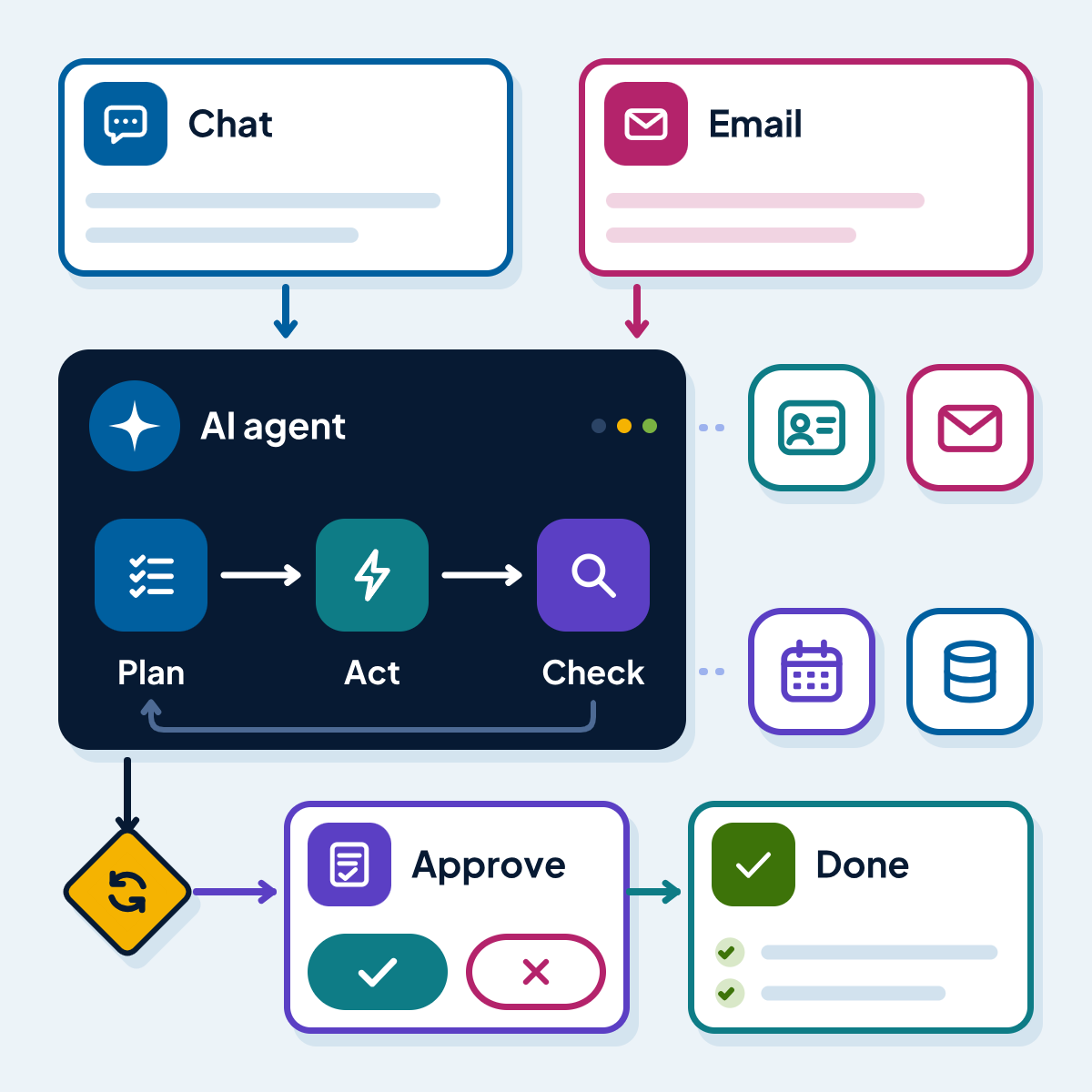
- A system where a language model decides which steps to take and which tools to call to finish a task, within limits you set.
- Run budget
- The monthly cost of keeping an AI system live: model usage, hosting, monitoring and the hours to maintain content and prompts.
Get new guides by email
Articles and guides from our team, and company news. Unsubscribe at any time.
About AcmaSoft
AcmaSoft designs and builds websites, mobile apps and custom software, and runs SEO and digital marketing for its clients.
- Years of experience
- 17+
- Clients served
- 650+
- Projects delivered
- 2,000+
- Products shipped
- 300+