Who the EU AI Act covers outside the EU, how the four risk tiers work, the dated timeline after the AI Omnibus, fines, and the logging, oversight and disclosure we build into AI systems. Not legal advice.
A company in Manchester, Austin, Pune or Dubai can fall under the EU AI Act without an office, a server or a single employee in Europe. The regulation follows the AI system and the people it affects, not the seller’s address. If you sell an AI product to European customers, or the output of your system is used in the EU, the rules can reach you.
This guide reads the regulation itself, Regulation (EU) 2024/1689 as amended by the AI Omnibus: who it covers, the risk tiers, the dates, and what we build into systems. It sits under our AI adoption roadmap for mid-sized businesses, where regulation is one of five gates before an AI project goes live. It describes the law; it is not legal advice.
Key takeaways
- The EU AI Act applies to providers outside the EU who place AI systems on the EU market, and to providers and deployers anywhere whose system's output is used in the EU (Article 2).
- Chatbots and writing tools usually sit in the transparency or minimal tiers. High-risk rules apply to listed uses such as recruitment and credit scoring, and to safety components of regulated products.
- The AI Omnibus moved the high-risk dates: 2 December 2027 for Annex III uses and 2 August 2028 for AI in Annex I products. Prohibitions have applied since 2 February 2025.
- Chatbots and voice agents must tell people they are dealing with AI, and generative systems must mark their output as machine-readable from 2 August 2026, with a grace period to 2 December 2026 for systems already on the market.
- Fines reach EUR 35 million or 7% of worldwide annual turnover for prohibited practices, and EUR 15 million or 3% for most other breaches.
Not legal advice
This article summarises the regulation and the European Commission's published guidance as of 13 Nov 2026 so you can brief your advisers. It does not say how the law applies to your business. If your system may be high-risk, take legal advice in the EU before you build or sell.
Who the EU AI Act applies to outside Europe
Article 2(1) of the regulation lists who is covered. Two points matter most for businesses outside the EU, quoted from the consolidated text on the Commission’s AI Act Service Desk (checked 13 Nov 2026):
- Providers placing AI systems on the EU market or putting them into service in the EU, “irrespective of whether those providers are established or located within the Union or in a third country”.
- Providers and deployers in a third country “where the output produced by the AI system is used in the Union”. This is the clause that catches many service businesses.
Two roles carry most of the obligations. A provider develops an AI system, or has one developed, and puts it on the market under its own name. A deployer uses an AI system under its own authority in a professional activity. A software company selling an AI recruitment tool to European employers is a provider; a European retailer using it to sort applicants is a deployer.
The output clause is wider than it looks. A UK lender scoring applicants in London is outside the Act; the same lender scoring applicants in Ireland may not be. What matters is where the output is used and who it affects.
Does the EU AI Act apply to UK companies?
It is not UK law, but a UK company is covered when it places an AI system on the EU market or when its system’s output is used in the EU. Inside the UK, AI falls under existing law, chiefly data protection law, and the Information Commissioner’s Office publishes guidance on AI and data protection, including advice on explaining decisions made with AI and an AI risk toolkit (checked 13 Nov 2026).
US, Indian and Gulf businesses
The same test applies. In the United States, the main federal reference is the NIST AI Risk Management Framework, released on 26 January 2023 for voluntary use (checked 13 Nov 2026). In the UAE, the federal Personal Data Protection Law, Federal Decree Law No. 45 of 2021, covers personal data. Our comparison of AI and data privacy laws in eight markets covers India and the others. None of these removes the EU obligations when you serve EU users.
Does the EU AI Act apply to this system?
Question 1: Is it an AI system, or a general-purpose AI model you place on the market?
- YesGo to question 2
- NoThe Act does not apply to it
Question 2: Do you place it on the EU market or put it into service in the EU?
Question 3: Is the system's output used in the EU, or are the people it affects in the EU?
- YesGo to question 4
- NoProbably outside scope; record why
Question 4: Does it fall under an exclusion, such as military use, scientific research only, or purely personal use?
- YesCheck the exclusion with your adviser
- NoGo to question 5
Question 5: Is the use on the Article 5 list of prohibited practices?
- YesDo not build or deploy it
- NoGo to question 6
Question 6: Is it a safety component of an Annex I product, or an Annex III use?
Question 7: Does an Article 6(3) condition apply, with no profiling of people?
- YesNot high-risk once documented and registered; check transparency duties too
- NoHigh-risk obligations apply
Question 8: Does it talk to people, generate content, or recognise emotions?
- YesTransparency duties apply (Article 50)
- NoMinimal risk; AI literacy and good practice
The four risk tiers
The Act sorts AI by what it is used for, not by the technology. The same language model can sit in the minimal tier as a spelling helper and in the high-risk tier as a CV screening tool. The European Commission’s regulatory framework page (checked 13 Nov 2026) describes four tiers.
| Tier | What it covers | Examples | What follows |
|---|---|---|---|
| Unacceptable risk | Practices listed in Article 5 | Social scoring, emotion recognition at work or school, untargeted scraping of face images, non-consensual intimate deepfakes | Banned |
| High risk | Safety components of products under Annex I law, and the eight Annex III areas | CV sorting, credit scoring, exam scoring, access to public benefits, critical infrastructure | Risk management, data governance, logs, documentation, human oversight, conformity assessment |
| Transparency risk | Systems that interact with people or generate content | Chatbots, voice agents, image and text generators, deepfakes | Tell people it is AI; mark generated output |
| Minimal risk | Everything else | Spam filters, recommendation of help articles, AI in video games | No specific obligations beyond AI literacy |
Source: Regulation (EU) 2024/1689 as amended, Articles 5, 6, 50 and Annex III, AI Act Service Desk; European Commission regulatory framework for AI. Checked 13 Nov 2026.
Prohibited practices
Article 5 bans, among others: harmful manipulation; exploiting vulnerabilities linked to age, disability or economic situation; social scoring; predicting crime from profiling alone; untargeted scraping of face images; emotion recognition in workplaces and schools except for medical or safety reasons; biometric categorisation to deduce sensitive traits; and, with narrow exceptions, real-time remote biometric identification in public spaces for law enforcement. The AI Omnibus added two more: generating realistic intimate images of an identifiable person without consent, and generating child sexual abuse material. Those two apply from 2 December 2026 (Article 5, checked 13 Nov 2026).
For most business software the practical point is emotion recognition: inferring how employees feel from their voice or face at work is banned unless a medical or safety reason applies.
High-risk uses
Annex III lists eight areas: biometrics; critical infrastructure; education and vocational training; employment and workers’ management; access to essential private and public services, including credit scoring and life and health insurance pricing; law enforcement; migration, asylum and border control; and the administration of justice and democratic processes.
An Annex III use is not automatically high-risk. Under Article 6(3) a provider can conclude otherwise if the system only performs a narrow procedural task, improves work a person already finished, flags patterns without replacing a human assessment, or prepares for an assessment. A system that profiles people is always high-risk, and a provider relying on the exception must document it and register the system.
Transparency duties
Article 50 is the rule most businesses meet first. People must be told when they are dealing with an AI system, unless it is obvious. Providers of systems that generate audio, images, video or text must mark the output in a machine-readable format. Deployers must disclose deepfakes, and AI-generated text published to inform the public, unless a person reviewed it and someone holds editorial responsibility. The notice must come at the latest at the first interaction.
Want a second opinion on your plans?
Tell us what you are working on. A specialist will look at it and reply with practical next steps.
Get in touchThe dated timeline of obligations
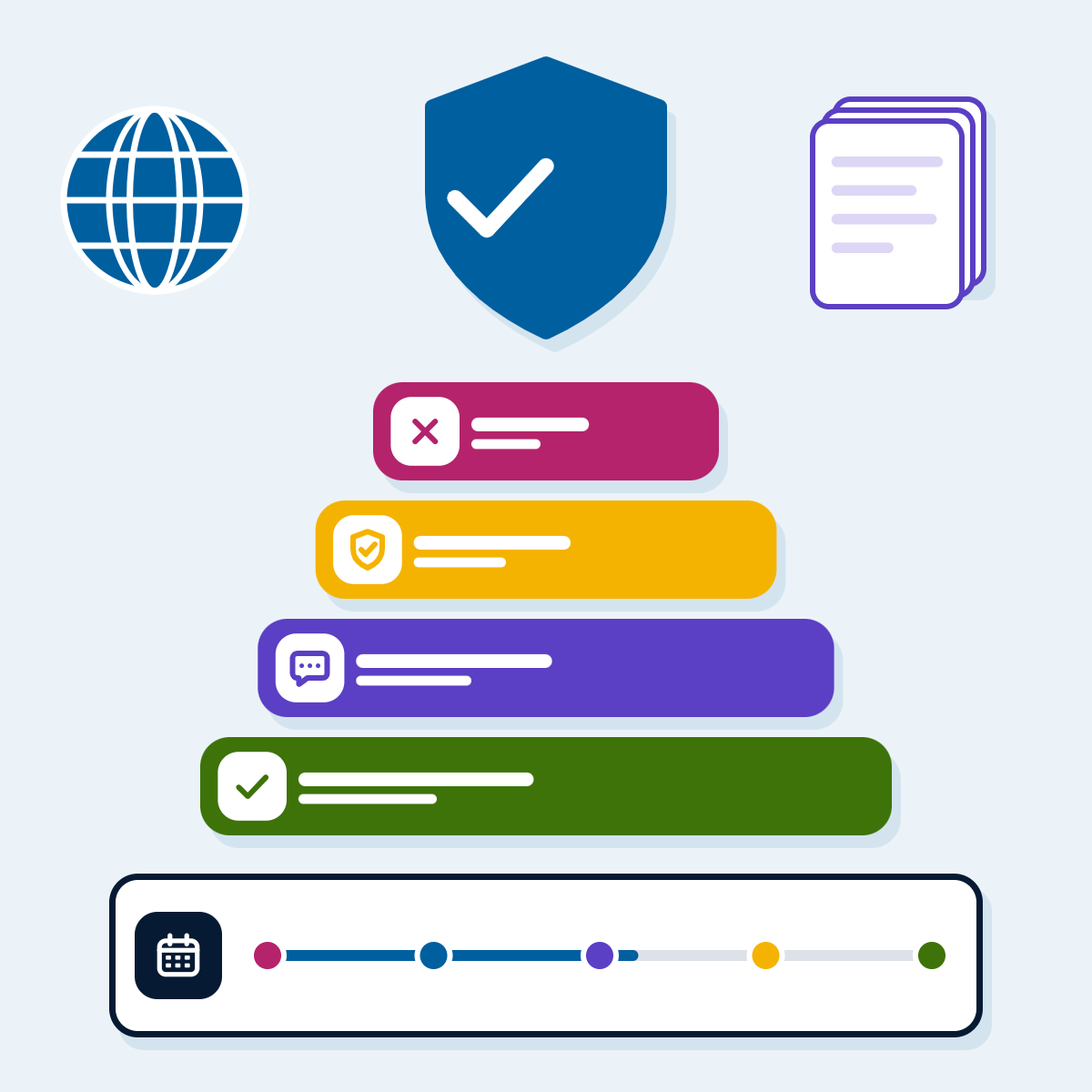
The Act entered into force on 1 August 2024 and applies in stages. The AI Omnibus, which entered into force on 27 July 2026 according to the Commission, changed several dates. The timeline follows the amended Article 113 and the transitional rules in Article 111.
1 Aug 2024
Entry into force
The regulation becomes law; nothing applies yet.
2 Feb 2025
Prohibitions and AI literacy
The Article 5 bans and the Article 4 duty to support AI literacy among staff.
2 Aug 2025
General-purpose AI and penalties
Duties for general-purpose AI model providers, governance and the penalty regime.
2 Aug 2026
General application
Most of the Act, including the Article 50 transparency duties; enforcement by national authorities and the AI Office.
2 Dec 2026
Two new bans; marking deadline
The Omnibus bans apply, and generative systems on the market before 2 Aug 2026 must mark output.
2 Aug 2027
Older general-purpose models
Models placed on the market before 2 Aug 2025 must comply.
2 Dec 2027
High-risk, Annex III
Uses such as recruitment, credit scoring and exam scoring.
2 Aug 2028
High-risk, Annex I
AI that is a safety component of regulated products.
A high-risk system already on the market before its date only falls under the high-risk rules if it is significantly changed afterwards, except for systems used by public authorities, which have until 2 August 2030 (Article 111(2)). Do not treat that as a reason to wait: ask your adviser whether a planned model swap, new data source or new use would count as a significant change.
What providers and deployers of high-risk systems must do
If your use case is high-risk, most of the obligations are engineering work rather than paperwork.
Providers need a risk management system, data governance, technical documentation, automatic logging, instructions for deployers, human oversight by design, and accuracy and cybersecurity suited to the purpose, plus a quality management system, a conformity assessment and registration in the EU database.
Providers based outside the EU must, by written mandate, appoint an authorised representative established in the Union before making a high-risk system available there (Article 22). The representative keeps the documentation available to authorities for 10 years and acts as their contact.
Deployers have their own list under Article 26: follow the instructions for use; give oversight to trained people with authority; keep input data relevant; monitor and report serious incidents; keep the system’s logs for at least six months; inform workers before using it at work; and tell people when it makes or assists decisions about them.
Penalties
Article 99 sets maximum fines as the higher of a fixed sum and a share of worldwide annual turnover (checked 13 Nov 2026): EUR 35 million or 7% for prohibited practices; EUR 15 million or 3% for most operator obligations, including Articles 22, 26 and 50; and EUR 7.5 million or 1% for misleading information to authorities. For SMEs and start-ups the lower of the two amounts applies, and the Omnibus extended that rule to small mid-caps for the last two bands.
What we build into AI systems
The Act’s requirements map onto design decisions you can make from the first sprint, and retrofitting them later is slow. We design these controls into client systems and our own products, whether or not the system is high-risk.
Logging that reconstructs a decision
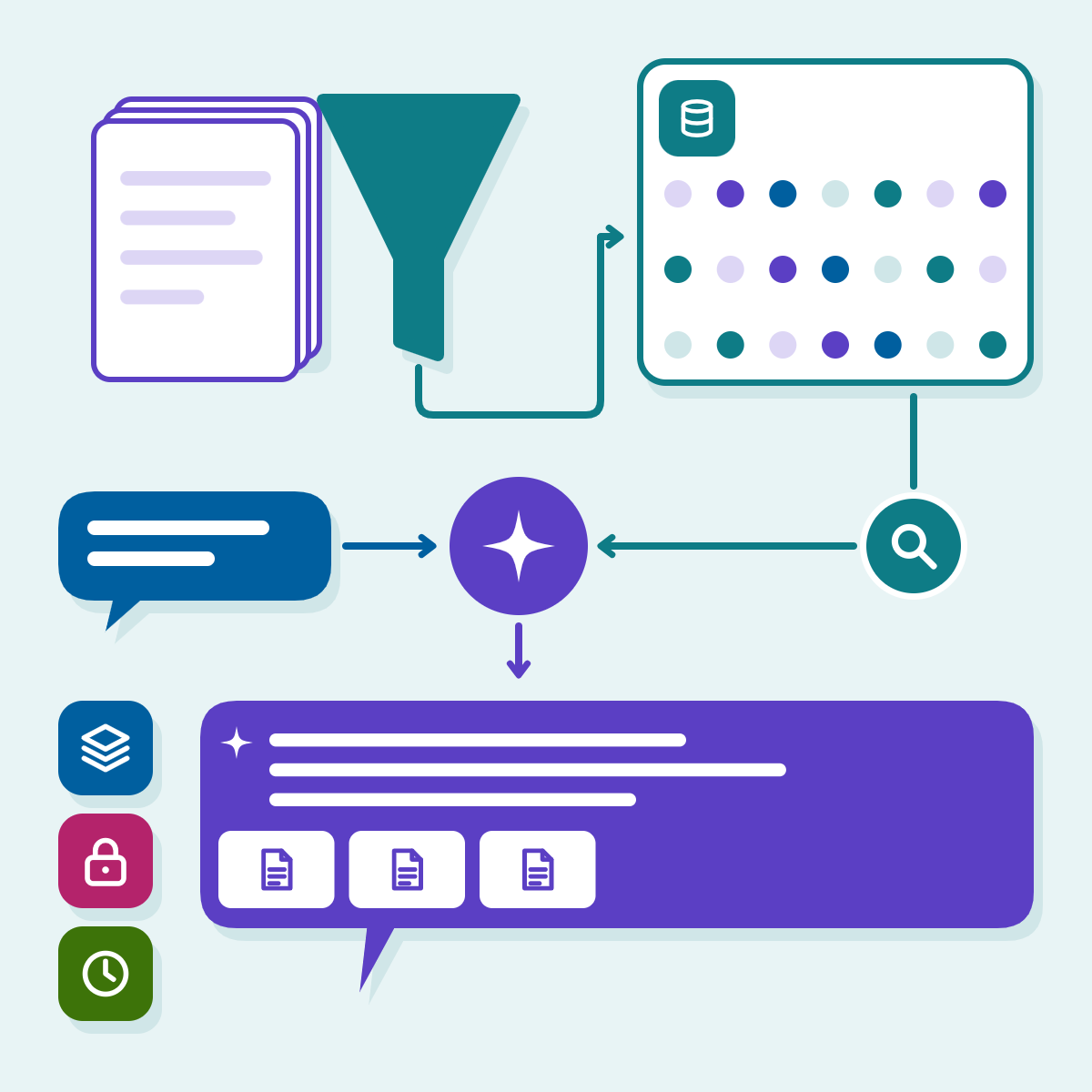
For each AI action we record the input, model version, prompt version, documents or tools used, output and any human action that followed. Article 12 asks high-risk systems for this kind of traceability, and any team needs it to debug a wrong answer. In attpro CollectOS, our collections platform, each AI voice call adds its recording, transcript and outcome to a hash-chained audit trail, so records cannot be silently changed.
Human oversight with real authority
Oversight means a person who understands the system’s limits can stop or override it. We design review queues, thresholds that route unclear cases to people, and a handover that passes the context along. In Acmafone CRM, AI agents and human agents work in the same workspace, so a conversation can move to a person with its history.
Transparency notices
A chatbot says it is an AI at the start of the conversation, a voice agent says so in its greeting, and generated content keeps the model provider’s machine-readable marking where one exists. Small interface details, but under Article 50 they are obligations.
A record of the classification
For every AI feature we write down which tier we believe it falls into and why, so the answer exists when an authority or a customer’s procurement team asks. Our quality and security practices cover the wider testing and security work around these controls.
A practical checklist
EU AI Act readiness for a business outside the EU
- List every AI system and general-purpose model you build, sell or use, with an owner for each
- Note whether each is placed on the EU market or its output is used in the EU, then classify it against Article 5, Annex I, Annex III and Article 50, and record the reasoning
- Remove or redesign anything that touches a prohibited practice, including emotion recognition at work
- Add AI disclosure to chatbots and voice agents, and machine-readable marking to generated content
- Run AI literacy training for staff who operate or use AI systems
- For possible high-risk systems, plan risk management, logging, documentation and human oversight now
- If you are a non-EU provider of a high-risk system, plan the appointment of an EU authorised representative
- Repeat the classification when the use, model or data changes
The Act also sits beside other frameworks. Some companies use the NIST AI RMF or ISO/IEC 42001 to structure the governance work that the Act requires; our comparison of AI governance frameworks explains how they fit together. We do not hold an ISO/IEC 42001 certificate ourselves, and we say so when clients ask.
How we help
Our AI consulting team runs the classification with you and writes it so your legal adviser can check it. In our generative AI development services, logging, oversight and disclosure are part of the design. For agents that act in other systems, our guide to AI agents for business covers the approval design oversight relies on.
Not sure which tier your AI use falls into?
- Book a free AI readiness assessment. You get a written view of your planned or current AI uses, the risks we see, including where the EU AI Act may apply, and the controls to build in, ready to review with your legal adviser.
Get new guides by email
Articles and guides from our team, and company news. Unsubscribe at any time.
About AcmaSoft
AcmaSoft designs and builds websites, mobile apps and custom software, and runs SEO and digital marketing for its clients.
- Years of experience
- 17+
- Clients served
- 650+
- Projects delivered
- 2,000+
- Products shipped
- 300+